
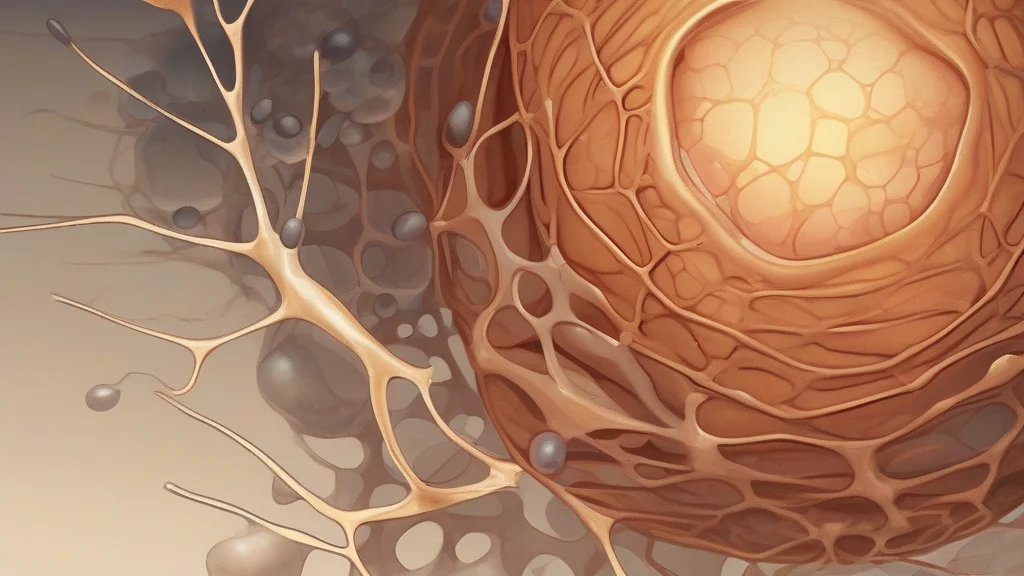
What does protoplast mean?
A protoplast is a living cell, especially a plant cell, from which the rigid cell wall has been removed. What remains is the plasma membrane and the cell’s internal contents, including the cytoplasm, nucleus, and organelles. Because the cell wall normally provides mechanical support, a protoplast is comparatively delicate and is usually kept under carefully controlled laboratory conditions. Protoplasts are important in research because their membranes can be manipulated and their contents can be fused or transferred. Researchers may combine protoplasts from different plants to create hybrid cells, exchange genetic material, or investigate how cells respond to environmental changes. The term is principally technical and appears in biology, biotechnology, and plant-tissue culture. It should not be confused with protoplasm, which denotes the living contents of a cell rather than necessarily the complete wall-free cell.
nounA plant cell or other cell from which the cell wall has been removed, leaving the plasma membrane and its contents. In modern biology, the term is used especially for the living, wall-free cells of plants and for protoplasts produced experimentally for fusion, genetic modification, or tissue culture.
- A living cell whose cell wall has been removed, especially a plant cell.
- The membrane-bound contents of a cell, viewed as a living unit.
"Researchers fused two plant protoplasts to create a hybrid cell."
"The protoplast collapsed when the protective cell wall was removed."
"Plant protoplasts can be fused to combine genetic material from different species."
The standard plural is used for individual wall-free cells.
"The researchers transferred the protoplasts into fresh culture medium."
A protoplast is a cell stripped of its rigid wall, leaving a delicate membrane-bound life form used to study and combine plant cells.
Reviewed by Deb Chak, Editor. AI-assisted content curated by RJS Tech Solutions LLP.
Where does protoplast come from?
The word combines Greek protos, meaning “first” or “primary,” and plastos, meaning “moulded” or “formed.” It developed in the context of cell theory, in which the living material of a cell was understood as its fundamental organized substance. Its modern scientific use follows the development of techniques for removing plant cell walls and manipulating wall-free cells.
Related word forms
How protoplast is actually used
The word is chiefly used in plant biology, microbiology, and cell biology. It is more technical than the general terms cell or cell body, and the modern sense normally refers to a cell that has been experimentally stripped of its wall or to a wall-free cell maintained in culture.
Easily confused with protoplast
A protoplast is an entire wall-free cell, including its plasma membrane, whereas protoplasm refers primarily to the living contents of a cell.