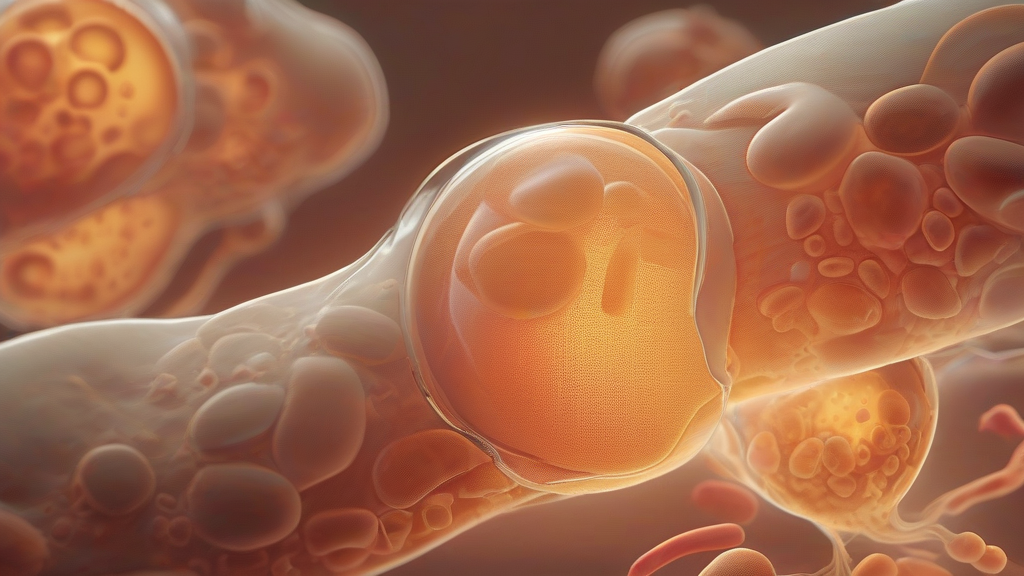
What does cytoplast mean?
A cytoplast is the cytoplasmic portion of a biological cell that remains once the nucleus has been removed, whether by surgical microdissection or natural fragmentation. The term belongs to the vocabulary of cytology and reproductive biology, where enucleated cytoplasts play a central role in techniques such as somatic cell nuclear transfer — the method behind Dolly the Sheep — in which a nucleus is transferred into a prepared cytoplast to create a cloned embryo. Despite lacking a nucleus, a cytoplast is not inert: it retains organelles including mitochondria and ribosomes, and can sustain limited metabolism, movement, and protein synthesis. The word derives from Greek roots: 'kytos', meaning hollow vessel or cell, and 'plastos', meaning moulded or formed. It should not be confused with the broader term cytoplasm, which denotes the entire intracellular substance rather than a defined, nucleus-free unit.
nounThe portion of a cell's cytoplasm that remains after the nucleus has been removed, or more broadly a discrete cytoplasmic unit such as a cell fragment lacking a nucleus. In plant biology, it also refers to the cytoplasmic contents of a cell enclosed by the plasma membrane.
- The cytoplasmic remnant of a cell remaining after removal or loss of the nucleus, used especially in cloning and cell-fusion experiments.
- The cytoplasmic contents of a cell considered as a structural unit within the plasma membrane.
"The enucleated cytoplast retained the cell's mitochondria and continued metabolising for several hours."
"Researchers fused the cytoplast with a donor nucleus to reprogramme the resulting cell."
"Under the microscope, each cytoplast appeared as a small granular body drifting free of its parent cell."
Standard English pluralisation; used when referring to multiple enucleated fragments in experimental descriptions.
"The centrifugation yielded dozens of viable cytoplasts for the fusion experiment."
A cytoplast is a living cell with its command centre ripped out — and remarkably, these nucleus-free fragments can still move, metabolise, and even be fused with other cells.
Reviewed by Deb Chak, Editor. AI-assisted content curated by RJS Tech Solutions LLP.
Etymology of cytoplast
The word cytoplast combines two ancient Greek elements: 'kytos' (κύτος), meaning a hollow vessel or container, which biologists adopted to mean 'cell', and 'plastos' (πλαστός), meaning moulded or formed. It was coined in the late nineteenth century alongside related terms such as protoplast and cytoplasm as microscopy revealed the internal architecture of cells. Its closest relatives are the family of '-plast' terms in biology, all built on the same 'formed body' suffix.
How cytoplast is actually used
A technical term confined to cytology, developmental biology, and cloning research; rarely encountered outside scientific literature. It is most often used in discussions of somatic cell nuclear transfer and micromanipulation experiments.
Easily confused with cytoplast
A protoplast is an intact living cell with its membrane but no cell wall (in plants), whereas a cytoplast is specifically the cytoplasm of a cell from which the nucleus has been removed.
Cytoplasm is the general substance filling a cell between the membrane and the nucleus, while a cytoplast is a defined unit or remnant of cytoplasm — typically one left behind after nuclear removal.