What does daemon mean?
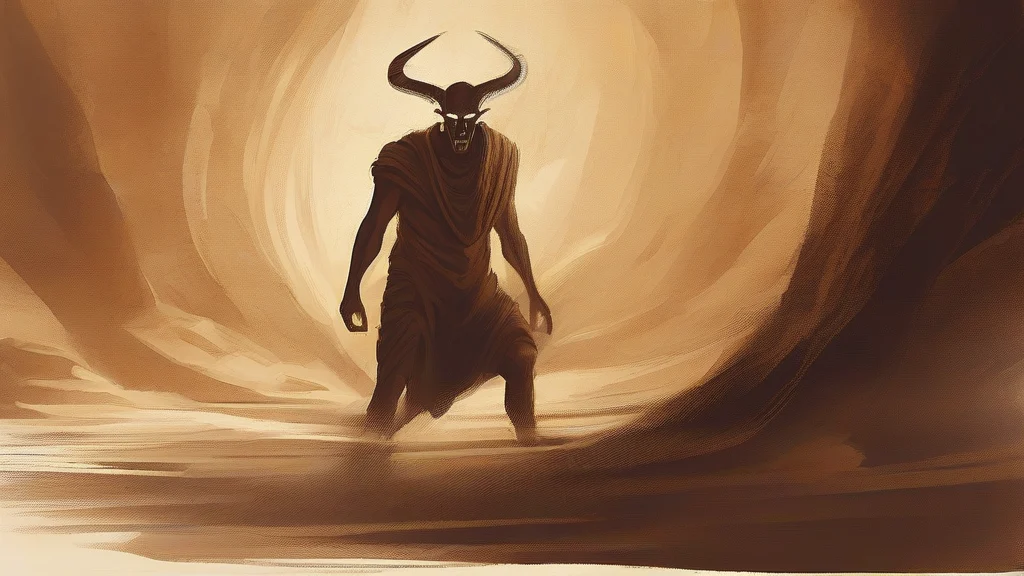
A daemon is a noun with two strikingly different lives. In classical Greek belief, a daemon was an attendant spirit or lesser divine being, occupying the space between mortals and gods; such a spirit might serve as a personal guide or guardian, as in Socrates's famous inner daimonion. Over centuries, especially under Christian influence, the related spelling 'demon' came to denote an evil spirit, and the two words diverged sharply in connotation. The older, more neutral sense survives in literary and philosophical use. Meanwhile, 'daemon' has taken on an entirely modern meaning in computing: a background process that runs continuously without direct user interaction, handling tasks such as delivering email, scheduling jobs, or managing network services. This usage, popularized by Unix systems, deliberately echoes the mythological sense of an unseen, helpful presence working behind the scenes. Today most people encounter daemons only as invisible software servants, making the word a rare case of ancient religion living on in everyday technology.
(Computing) A background process on a computer system that runs continuously and handles service requests without direct user intervention.
"The web server runs as a daemon so it can respond to requests around the clock."
Standard on Unix-like systems; the acronym-style expansion 'Disk And Execution MONitor' was coined retroactively and is not the true origin.
(Classical mythology) An attendant spirit or lesser deity in ancient Greek belief, intermediary between gods and humans, often acting as a personal guiding force.
"In Plato's account, Socrates attributed his hesitations to his lifelong daemon."
The standard plural simply adds -s; 'daemones' is occasionally seen in scholarly writing about antiquity but is rare.
"Several daemons were restarted after the server upgrade."
The word 'daemon' survived two thousand years and a spelling change to end up running invisibly inside nearly every computer on Earth.
Reviewed by Deb Chak, Editor. AI-assisted content curated by RJS Tech Solutions LLP.
Etymology of daemon
Daemon comes directly from the ancient Greek 'daimon' (δαίμων), meaning a divine power, fate, or attendant spirit, a term used by writers from Homer onward. Latin adopted the word as 'daemon', preserving the neutral or benevolent sense of a guiding spirit. During the Hellenistic period and later, under Jewish and Christian influence, the Greek word acquired increasingly negative associations and became identified with evil spirits, giving rise to English 'demon'; the separate spelling 'daemon' was revived in the Renaissance and later to signal the original classical meaning. Its cognates include 'demonic' and words built on the same Greek root, such as 'eudaimonia' ('good-spiritedness' or flourishing).
How daemon is actually used
In technical writing, 'daemon' (often pronounced /ˈdiːmən/) is the standard term on Unix-like systems; the variant spelling 'demon' appears occasionally in older computing literature. In classical and literary contexts the word carries its older Greek sense and should not be assumed to mean an evil spirit — that connotation belongs to 'demon', whose negative meaning developed largely through later religious influence.
Easily confused with daemon
A demon is an evil spirit or devil, while a daemon originally meant a benign or neutral guiding spirit, and in computing refers to a background process — though the spelling 'demon' is sometimes used interchangeably for the computer sense.