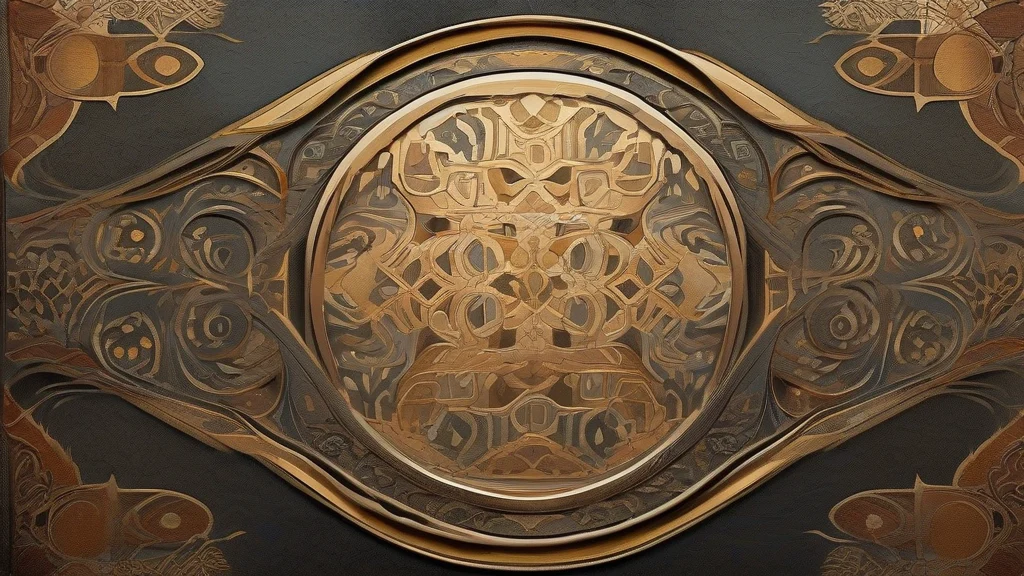
What does damascened mean?
Damascened describes metalwork that has been ornately decorated through damascening — the craft of inlaying patterns of gold, silver, or copper into a darker base of steel or iron. The technique takes its name from Damascus, the Syrian city long famed for producing exceptionally fine swords and metalwork, though similar traditions flourished in Japan, Persia, Spain (notably Toledo), and India. A damascened blade or helmet typically shows delicate scrolling vines, arabesques, or geometric figures gleaming against the grey of the metal, giving objects an air of luxury and meticulous handiwork. Today the word appears almost exclusively in formal writing about antique arms, armour, clocks, and collectible decorative arts. It functions as the past participle and adjective form of the uncommon verb 'to damascene,' and it is sometimes spelled 'damaskeened.' Because it evokes ancient craftsmanship, the word lends any description a sense of history, rarity, and refinement.
Decorated with intricate inlaid patterns of precious metals on a base of steel or iron, after the style of Damascene metalworkers.
"The damascened scabbard caught the lamplight in threads of silver."
Almost always applied to metal objects — blades, gun barrels, helmets, clock cases — rather than to textiles or other materials.
Past participle of 'damascene': having been ornamented by inlaying metal designs.
"Every plate of the ceremonial armour had been damascened by master artisans in Toledo."
Usually preceded by a form of 'be' or 'have'; the active verb 'damascene' itself is rare outside technical writing.
A single word links Damascus's legendary swordsmiths, Japanese katana blades, and the plum called a damson — all trace back to one ancient city.
Reviewed by Deb Chak, Editor. AI-assisted content curated by RJS Tech Solutions LLP.
Etymology of damascened
'Damascened' derives from the verb 'damascene,' meaning to decorate metal with inlaid work, which itself comes from 'Damascus,' the capital of Syria renowned since antiquity for its fine swords and metalcraft. The place name entered Middle English via Old French and medieval Latin forms such as 'Damascus,' also yielding related words like 'damask' (the patterned fabric) and 'damson' (the plum). The verb and its participle became established in English during the early modern period, when European collectors prized Eastern inlaid weaponry.
Related word forms
How damascened is actually used
'Damascened' is chiefly used as the past participle and adjectival form of the rare verb 'to damascene.' The term belongs to formal registers and is most often encountered in descriptions of antique arms, armour, clocks, and decorative metalwork; it carries connotations of craftsmanship, luxury, and antiquity. Related adjectives 'damascened' and 'damaskeened' both occur, with 'damascened' being the more standard spelling.
Easily confused with damascened
'Damaged' means harmed or broken, whereas 'damascened' refers to metalwork ornately decorated by inlaying.