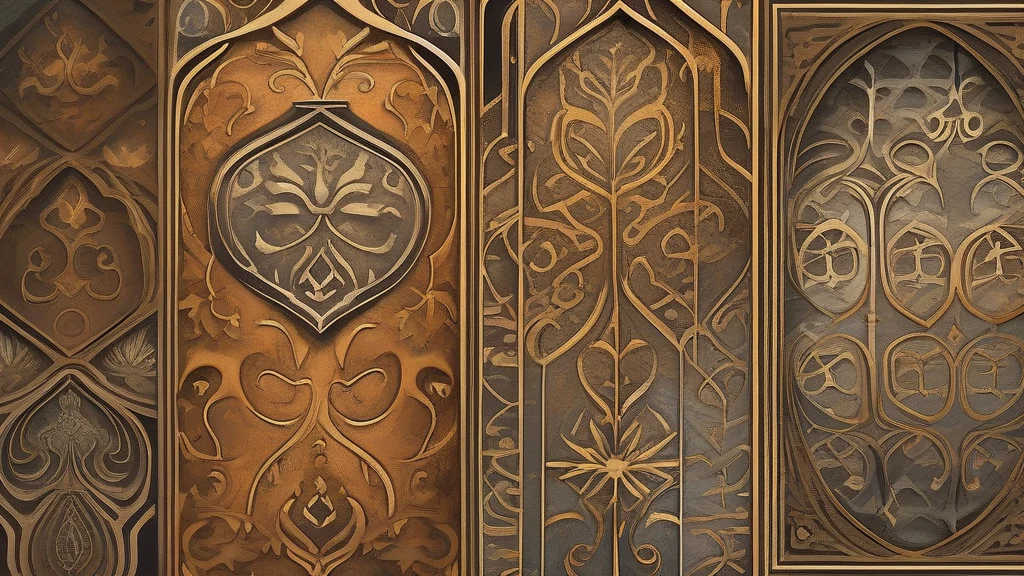
What does damascene mean?
"Damascene" derives from Damascus, the ancient Syrian city renowned for two celebrated products: fine patterned steel blades and ornate metalwork inlaid with gold and silver. As an adjective, it most often describes such decorative metalwork — a damascene pattern of swirling, watered lines — or anything characteristic of Damascus. It can also serve as a noun for a native of Damascus, and as a verb meaning to ornament metal by inlaying precious wires into its surface. In modern usage, however, the word is best known in the figurative phrase "Damascene conversion", which denotes a sudden, overwhelming change of mind or belief, alluding to Saint Paul's transformation on the road to Damascus. This usage appears frequently in political commentary and formal prose, particularly in Britain. The word lends writing an air of history and craftsmanship, evoking both the artistry of medieval armourers and moments of dramatic personal revelation.
Of or characteristic of Damascus, especially its ornamental metalwork inlaid with gold or silver.
"The collector admired the damascene detailing on the antique dagger's hilt."
A native or inhabitant of Damascus.
"As a lifelong Damascene, she knew every alley of the old city."
To decorate metal, typically iron or steel, by inlaying it with gold or silver.
"Craftsmen damascene the surface with fine threads of gold."
Used when referring collectively to natives or inhabitants of Damascus.
"The market was crowded with Damascenes going about their morning trade."
A 'Damascene conversion' means a sudden, total change of heart — named after Saint Paul's dramatic conversion on the road to Damascus.
Reviewed by Deb Chak, Editor. AI-assisted content curated by RJS Tech Solutions LLP.
Etymology of damascene
Damascene comes via Latin Damascenus from Greek Damaskēnos, meaning "of Damascus", the Syrian capital whose workshops gave the world both patterned steel and gold-inlaid metalwork. The word entered English in the late Middle Ages alongside related borrowings from the same source, including damask (the fabric and later the rose) and damson (the plum), all originally denoting goods associated with Damascus. The figurative sense of sudden spiritual awakening arose from the biblical account of Saint Paul's conversion on the road to Damascus.
Related word forms
How damascene is actually used
The figurative sense is almost always confined to the phrase 'Damascene conversion', common in British journalism and formal writing; American usage favours 'road-to-Damascus moment'. As a verb, 'damascene' belongs chiefly to the vocabulary of metallurgy and antiques, where 'damascened' describes finished work.
Easily confused with damascene
Damask is a woven fabric with a figured pattern (or the pattern itself), while damascene refers to Damascus-style metalwork inlay or things relating to Damascus.