
What does machine mean?
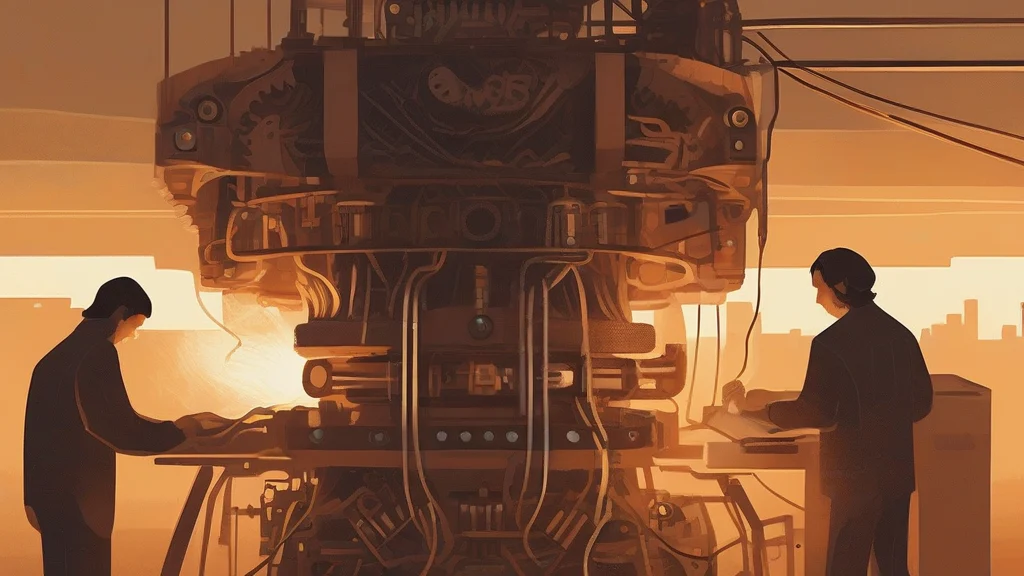
A machine is a device or system that uses power to carry out a defined task, ranging from simple tools and engines to computers, industrial equipment, and automated production lines. The word commonly suggests a mechanism whose operation depends on organized parts, technology, or programmed rules rather than individual judgment. In everyday and technical English, it can refer specifically to machinery, such as a washing machine or machine tool, but it also has broader applications: a computer may be called a machine, while a complex social or administrative arrangement can be described as a machine. As a verb, “to machine” means to operate or process something mechanically, often with an implication of speed, regularity, or reduced human involvement. The term is also used figuratively when people behave repetitively or without apparent emotion. Across these uses, “machine” combines a clear mechanical reference with broader implications of automation, efficiency, and standardized control.
A device or system that uses mechanical, electrical, electronic, or other power to perform a defined function.
"The factory installed a machine that packages the products automatically."
The word can be used broadly for computers and other automated systems, as well as for individual mechanical devices.
To operate a device mechanically, or to produce or process something through an automated or highly standardized system.
"The software machines the recordings into several different formats."
This use is relatively formal and commonly appears in technical, manufacturing, or media-production contexts.
The plural is used for individual devices or systems, especially when several machines are being counted or compared.
"The new machines are more efficient than the ones they replaced."
The word machine comes from a Greek term associated with lifting and moving loads, a fitting origin for devices designed to do mechanical work.
Reviewed by Deb Chak, Editor. AI-assisted content curated by RJS Tech Solutions LLP.
Where does machine come from?
English borrowed the word through Old French from Latin machina, which came from the Greek mākhanē, “machine” or “device,” associated with the idea of lifting or moving a load. Over time, the word developed from its early associations with mechanical devices into a general term for powered equipment and, much later, for electronic and computerized systems. Its related forms, including “mechanism,” “machinist,” and “mechanical,” preserve the same long-standing connection with devices, structure, and the movement of parts.
Related word forms
How machine is actually used
The noun is common in technical, industrial, and scientific contexts. The verb is more formal and often implies automated or highly standardized processing. Calling a person a machine is figurative and may sound dismissive or dehumanizing.
Easily confused with machine
A machine is a physical or computational device, whereas a mechanism is a process or arrangement of interacting parts that produces a result.