
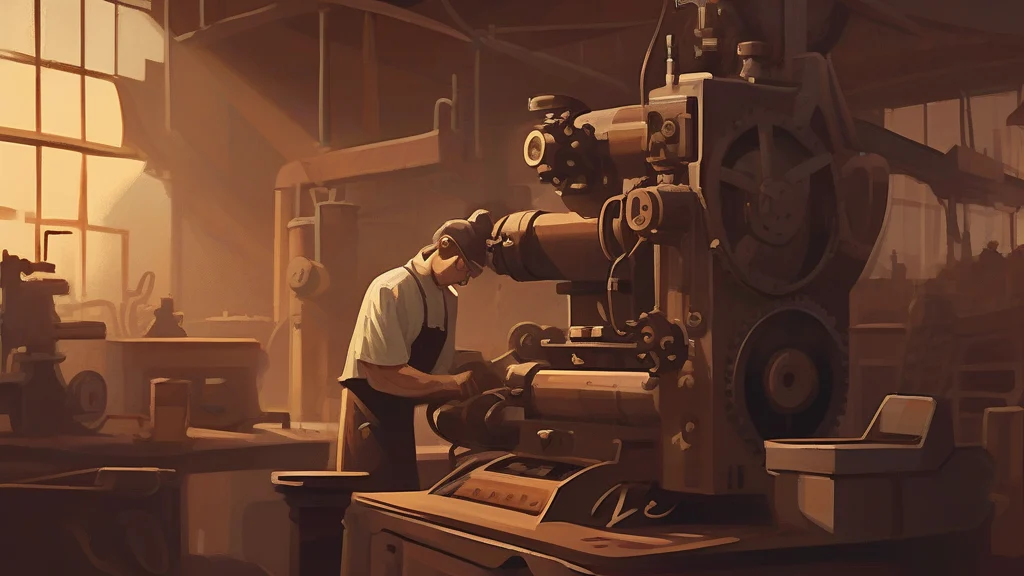
What does machinist mean?
A machinist is a skilled craftsperson or technician who operates machine tools and makes components to precise specifications. The work commonly involves turning, milling, drilling, grinding, or cutting materials such as metal, wood, and plastic. Machinists may work in machine shops, factories, engineering workshops, or specialized production environments, and they typically use drawings, blueprints, measuring instruments, and computer-controlled equipment. The word suggests technical precision as well as practical knowledge of materials and tooling. It differs from a mechanic, whose work usually focuses on diagnosing, maintaining, or repairing existing machinery or vehicles. Although “machine operator” can describe a similar occupation, “machinist” more often emphasizes advanced skill, craftsmanship, and the ability to produce accurate parts.
nounA person skilled in operating machine tools and making precision components from metal, wood, plastic, or other materials. The term may also refer generally to a worker skilled in the manufacture or repair of machinery.
- A person skilled in operating machine tools or working with machinery, especially in manufacturing or precision machining.
"The machinist carefully programmed the CNC machine to cut the replacement part."
"The machinist inspected the finished components for microscopic inaccuracies."
"After completing her apprenticeship, she became a machinist at an aircraft factory."
The regular plural is “machinists”; one “machinist” refers to an individual skilled worker.
"The factory employs experienced machinists to produce precision components."
A machinist turns raw material into precise parts, often working to measurements smaller than the width of a human hair.
Reviewed by Deb Chak, Editor. AI-assisted content curated by RJS Tech Solutions LLP.
Where does machinist come from?
The English word “machinist” was formed in the 19th century from “machine” and the suffix “-ist,” meaning a person who works with or specializes in something. It belongs to a family of terms connected with the idea of machines, including “machinery,” “mechanism,” and “mechanist.” Its development reflects the expansion of mechanized manufacturing and the growing professional recognition of precision metalworking.
Related word forms
How machinist is actually used
The term is practical and commonly used in manufacturing, engineering, and trades. In British English, it may overlap with a toolmaker or machine operator, while in American English it often specifically denotes a skilled worker who operates machine tools in a machine shop.
Easily confused with machinist
A machinist typically operates machine tools and manufactures precision parts, whereas a mechanic diagnoses, maintains, or repairs machines, engines, and vehicles.