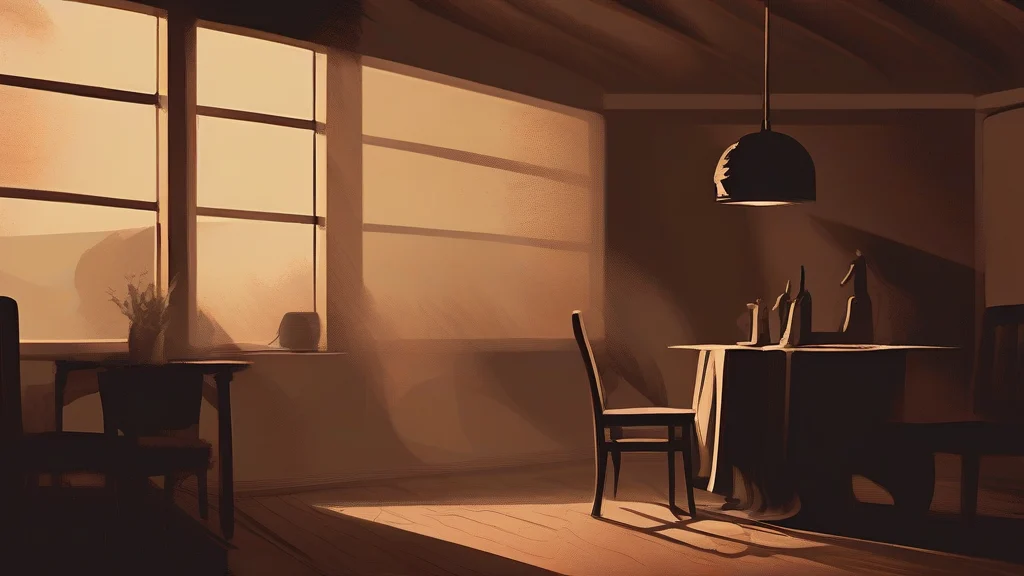
What does darker mean?
Darker is the comparative form of the adjective 'dark', describing something that has less light, a deeper shade, or a heavier tone than something else. It operates on two main levels: literally, as in a darker room, a darker fabric, or a darker roast of coffee; and figuratively, where it signals something more sinister, sombre, or disturbing, as in a film's darker themes or the darker side of human nature. Because comparison is built into its form, it usually appears alongside an explicit or implied reference point — darker than what came before, darker than expected, or simply darker as conditions change. It is standard in both British and American English and carries no particular register restriction, appearing equally in everyday speech, literature, and technical description. Its flexibility across physical and emotional domains makes it a compact, expressive tool for contrast and atmosphere.
adjectiveThe comparative form of the adjective 'dark', meaning having less light than something else, or greater in shade, intensity, or gloominess.
- Having less light; more dark than another thing in literal brightness or colour.
- Figuratively more grim, sinister, melancholy, or morally troubling.
"The sky grew darker as the storm approached."
"She chose a darker shade of blue for the bedroom walls."
"The novel takes a darker turn in its second half."
'Darker' is one of those rare comparatives that can describe everything from a coffee roast to a plot twist — and Shakespeare used 'darkling' from the same root to mean 'in the dark'.
Reviewed by Deb Chak, Editor. AI-assisted content curated by RJS Tech Solutions LLP.
Etymology of darker
Darker derives from 'dark', an adjective of Old English origin ('deorc'), meaning without light or gloomy. The comparative suffix '-er' is a native English formation inherited from Germanic inflection, giving 'darker' the sense of 'more dark'. Cognates appear in other Germanic languages, reflecting a shared Proto-Germanic root. The word has been in continuous use since Middle English, developing figurative senses of gloominess and moral shadow alongside its literal use.
Related word forms
How darker is actually used
Common in both literal (colour, light) and figurative (mood, tone, subject matter) contexts. Frequently appears in phrases like 'the darker side of...' to introduce unpleasant aspects of a topic.
Easily confused with darker
As an adjective 'darker' compares levels of light or colour; it is rarely used as a noun meaning an agent that darkens.