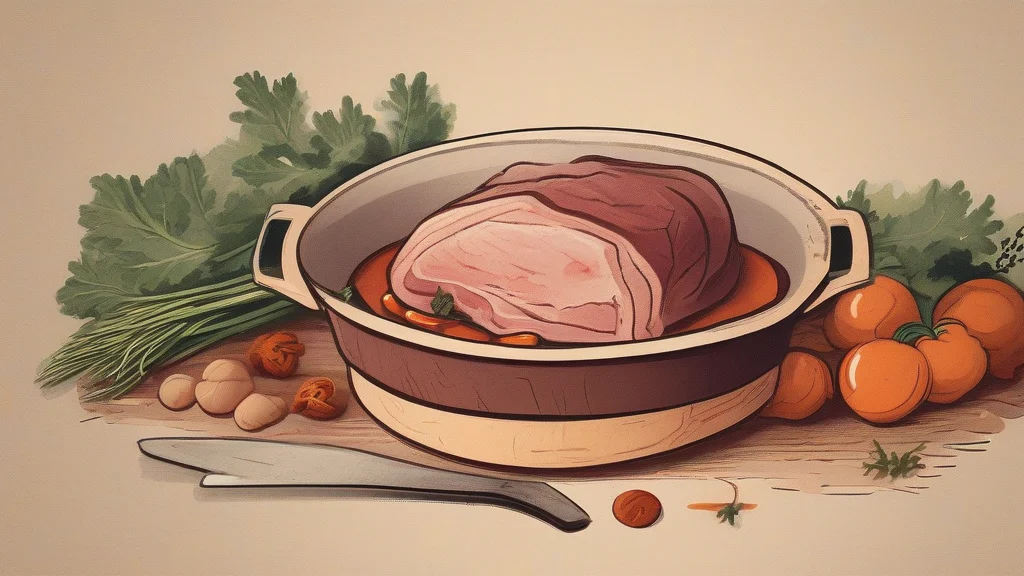
What does daube mean?
A daube is a classic French stew in which beef is marinated in wine and then braised very slowly with vegetables, herbs, and often bacon, brandy, or olives. The best-known version, daube provençale, comes from Provence in southern France, where it is traditionally made with red wine and aromatic herbs such as thyme and bay. The long, gentle cooking gives the dish its defining character: deeply flavored, meltingly tender meat in a rich, glossy sauce. In English, "daube" belongs mainly to the vocabulary of food writing, menus, and serious home cooking, lending a dish a touch of continental sophistication that the plainer word "stew" lacks. Because the name signals a specific technique — marinating followed by slow braising in wine — using it accurately conveys both method and heritage. For cooks and readers alike, it evokes warmth, patience, and the rustic elegance of the French countryside kitchen.
nounA French-style stew of beef braised slowly in wine, typically with vegetables, herbs, and sometimes bacon or brandy.
- A slow-braised beef stew cooked in wine with vegetables and aromatics, especially in French cuisine.
"She simmered a rich daube of beef all afternoon until the meat fell apart at the touch of a fork."
"The daube had been marinating overnight in red wine, garlic, and thyme before it went into the oven."
"On cold winter evenings, nothing suited her better than a hearty daube served with crusty bread."
Usually treated as uncountable when referring to the dish generically; the plural appears mainly on menus or when comparing different versions of the dish.
"The cookbook devotes a whole chapter to daubes, from Provençal classics to modern variations."
This humble beef stew traces its name back through Provençal kitchens and medieval Arabic — the same linguistic root that gave us "adobe" and the Mexican dish "adobo."
Reviewed by Deb Chak, Editor. AI-assisted content curated by RJS Tech Solutions LLP.
Etymology of daube
The word "daube" entered English in the nineteenth century by way of modern French, where it names this celebrated beef stew. Its deeper roots lie in the Provençal dialect of Occitan, specifically the form adobo, meaning a marinade or seasoned preparation, which itself derives from the Spanish verb adobar, "to marinate or season." Spanish scholars trace adobar further back to medieval Arabic, reflecting the profound influence of Moorish cooking on Iberian cuisine. This same Arabic lineage ultimately connects the word to "adobe," making distant cousins of a Provençal stew and a sun-dried brick.
How daube is actually used
"Daube" is a culinary term used chiefly in food writing, cookery books, and restaurant menus; it carries a slightly refined, continental connotation compared with plain words like "stew." It appears most often in reference to Provençal cooking, where the dish is known as daube provençale. It is an uncountable mass noun when referring to the dish generally, though plural forms occur on menus listing multiple preparations.
Easily confused with daube
"Daub" means to smear or coat something messily (or a crude plaster of mud and straw), while "daube" is the French beef stew — one letter apart but entirely unrelated in meaning.