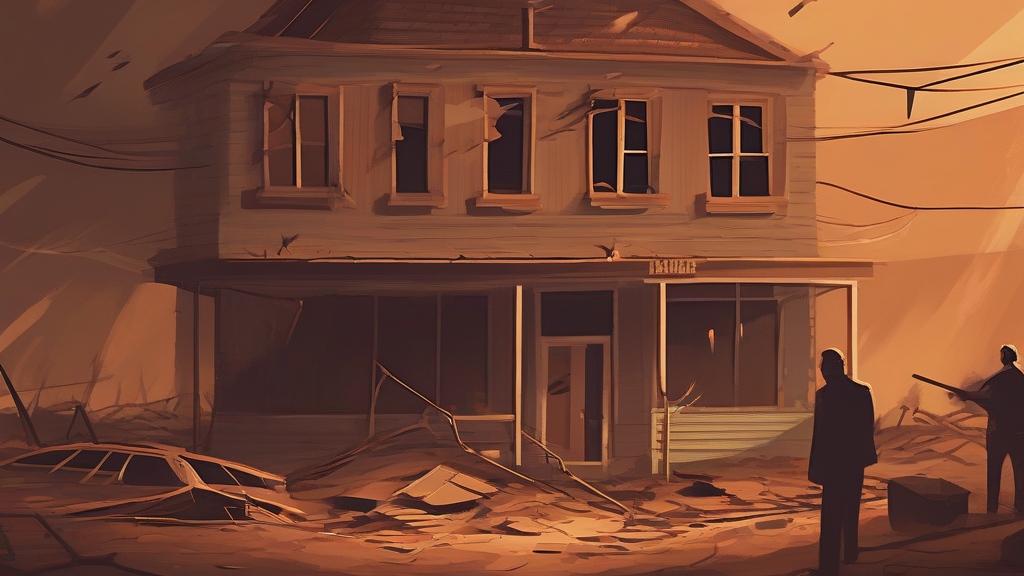
What does debacle mean?
A debacle is a sudden, complete, and humiliating failure — the kind of collapse that unfolds publicly and leaves those responsible looking incompetent. The word applies to enterprises, plans, military campaigns, elections, financial schemes, and performances: anything that was expected to succeed but instead disintegrates spectacularly. Its connotations are strongly negative, blending disaster with embarrassment, which makes it a favourite of journalists and commentators describing political scandals, botched product launches, or sporting humiliations. More forceful than a simple 'failure' and more chaotic than a mere 'defeat', a debacle implies not just that things went wrong but that they went wrong messily and visibly. Interestingly, the word began with a concrete physical meaning: in French it originally described the breaking up of ice on a river, before being extended to any violent disruption and then to catastrophic failure. That vivid origin still echoes in its modern sense of things cracking apart under pressure.
nounA sudden and complete failure, especially one that is humiliating or disastrous. Originally, a violent breaking-up of ice on a river.
- A sudden, ignominious failure; a complete collapse or rout.
- (Now rare/historical) The breaking up of ice in a river.
"The product launch turned into a total debacle when the website crashed within minutes."
"The government's handling of the crisis was widely described as a debacle."
"What should have been a smooth merger descended into a legal debacle that dragged on for years."
Regular plural; used when referring to multiple distinct failures or disasters over time.
"After two successive debacles, the board replaced the entire management team."
Debacle once meant something far more literal: the violent shattering of river ice in spring — and English borrowed it from French only after watching Napoleon's army freeze and collapse in Russia.
Reviewed by Deb Chak, Editor. AI-assisted content curated by RJS Tech Solutions LLP.
Etymology of debacle
The word comes from French débâcle, which originally denoted the breaking up of ice on a river, derived from the verb débâcler meaning to unbar, clear away, or free — formed from dé- ('un-') plus bâcler ('to bar'), ultimately linked to Latin baculum, meaning 'staff' or 'stick'. In the mid-19th century, following French usage surrounding the disastrous retreat of Napoleon's army from Russia, the term broadened metaphorically to mean a violent disruption or rout, and English adopted this figurative sense of a complete collapse or ignominious failure. Cognates sharing the Latin root baculus include baule-related forms such as 'bacillus', literally 'little staff'.
How debacle is actually used
Debacle carries strongly negative connotations of public failure and often incompetence or humiliation; it is more emphatic than 'failure' and is common in journalism and political commentary. It typically refers to events rather than people — you call an enterprise, plan, campaign, or performance a debacle, not usually a person.
Easily confused with debacle
A rebuttal is a counter-argument refuting a claim, whereas a debacle is a disastrous failure — they share no etymological connection despite a vague phonetic resemblance.