
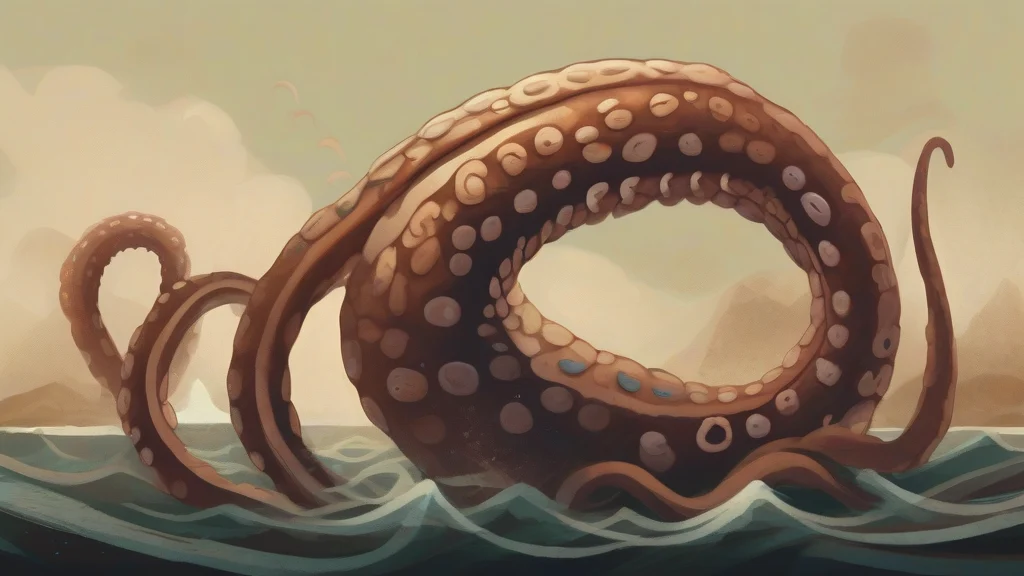
What does tentacle mean?
A tentacle is a flexible, elongated appendage of certain animals, especially invertebrates such as jellyfish, sea anemones, octopuses, and squid. Depending on the animal, a tentacle may sense its surroundings, capture prey, move the body, or anchor it to a surface. The term is also used figuratively for an intrusive or tenacious means of reaching, such as an organization’s influence over another market. In ordinary discussion, “tentacles” often evokes the many curling arms of an octopus and carries a vivid suggestion of grasping, entanglement, or reach. Because these structures can both explore and seize, the word works well in descriptions of curiosity and control. In zoological contexts it is an exact, useful noun; in journalism and everyday speech it is usually a clear metaphor rather than a technical term. Its unusual history also links it to the broader family of English words derived from Latin tendere, “to stretch.”
nounA slender, flexible, usually elongated appendage of certain animals, especially invertebrates, used for sensing, gripping, feeding, moving, or anchoring. By extension, the word refers metaphorically to a grasping or intrusive reach.
- A flexible, elongated animal appendage used for sensing, gripping, feeding, movement, or attachment.
- A figurative means of reaching, influencing, or extending into another area.
"The jellyfish drifted through the water, its long tentacles trailing behind it."
"The anemone closed its tentacles around the small fish."
"The company continued to extend its corporate tentacles into smaller markets."
The standard plural of tentacle, commonly used when referring to several appendages or to the appendages of an animal collectively.
"The octopus wrapped its tentacles around the rock."
An octopus’s arms can taste what they touch, making a reaching tentacle seem oddly like a hand that doubles as a mouth.
Reviewed by Deb Chak, Editor. AI-assisted content curated by RJS Tech Solutions LLP.
Where does tentacle come from?
The English noun dates from the late 16th century and comes from Latin tentaculum, a diminutive of tendere, “to stretch or extend.” Latin tendere also underlies cognate relatives including tendon, tend, tension, and tendency. The biological sense provided the basis for modern figurative uses about grasping reach, influence, or control.
Related word forms
How tentacle is actually used
Neutral and descriptive in zoological contexts. Figurative uses often suggest an intrusive, grasping, or tenacious reach and may carry a mildly threatening or conspiratorial tone.