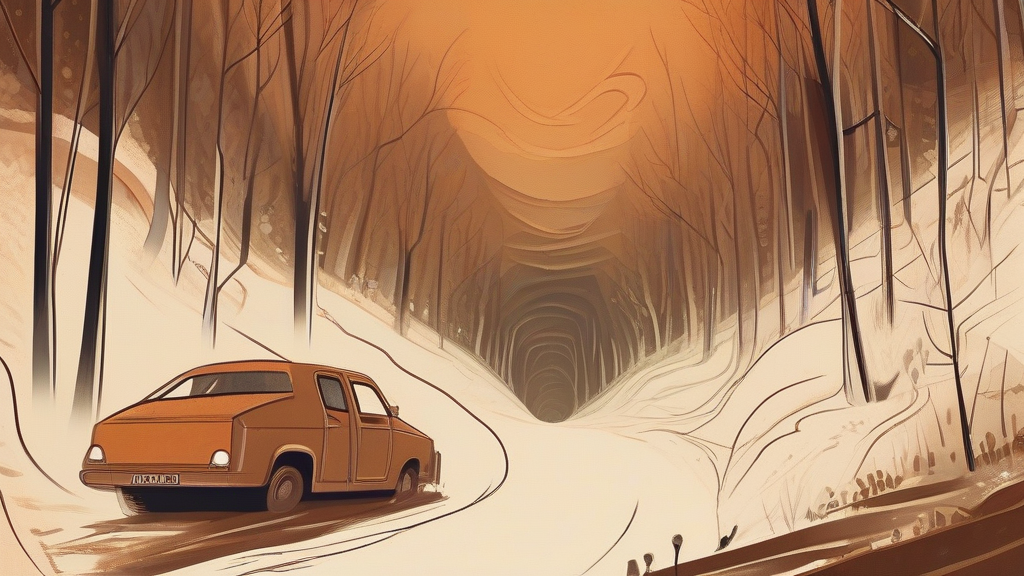
What does debouche mean?
Debouche refers to the point at which a confined passage — a river, gorge, valley, road, or defile — opens out into a wider space, functioning much like the word 'outlet' or 'mouth' but with a more precise topographical sense. Borrowed directly from French, where débouché derives from déboucher, meaning 'to unstop' or 'to emerge', the term carries the image of something breaking free from constriction. It is most at home in geographical description, military history, and mountaineering literature, where writers need to identify exactly where a defile empties onto open ground. Because of its rarity, debouche lends a text a distinctly learned or continental tone, and it should be used deliberately rather than as casual vocabulary. Readers encountering it will usually grasp its meaning from context: it marks a threshold between enclosure and openness, the narrow way giving onto the broad.
nounA place where a river, valley, road, or passage opens out or emerges into a wider space; an exit or mouth of such a passage.
- The point at which a river, valley, gorge, road, or passage opens out into a larger space; an outlet or mouth.
"The explorers finally reached the debouche of the canyon, where the river widened onto the plain."
"The debouche of the valley offered the army its only route onto the coastal plain."
"Geographers noted how the gorge's debouche had shifted over centuries of erosion."
Regular plural; used when referring to multiple outlets or exits.
"The map marked several debouches along the river's lower course."
Reviewed by Deb Chak, Editor. AI-assisted content curated by RJS Tech Solutions LLP.
Etymology of debouche
Debouche comes from the French débouché, the past participle of déboucher, formed from dé- ('un-') plus boucher ('to stop up'), which itself derives from bouche ('mouth'), ultimately from Latin bucca ('cheek'). The word entered English in the nineteenth century, primarily through geographical and military writing describing where valleys or roads emerge from mountains. It shares its Latin root bucca with words such as buccal, relating to the cheek.
How debouche is actually used
Debouche is rare in everyday English and belongs chiefly to geography, military history, and travel writing. It retains its French flavor and is often italicized or left with French diacritics as 'débouché'.
Easily confused with debouche
Debauch means to corrupt morally or engage in excessive indulgence, while debouche denotes the physical outlet where something emerges.