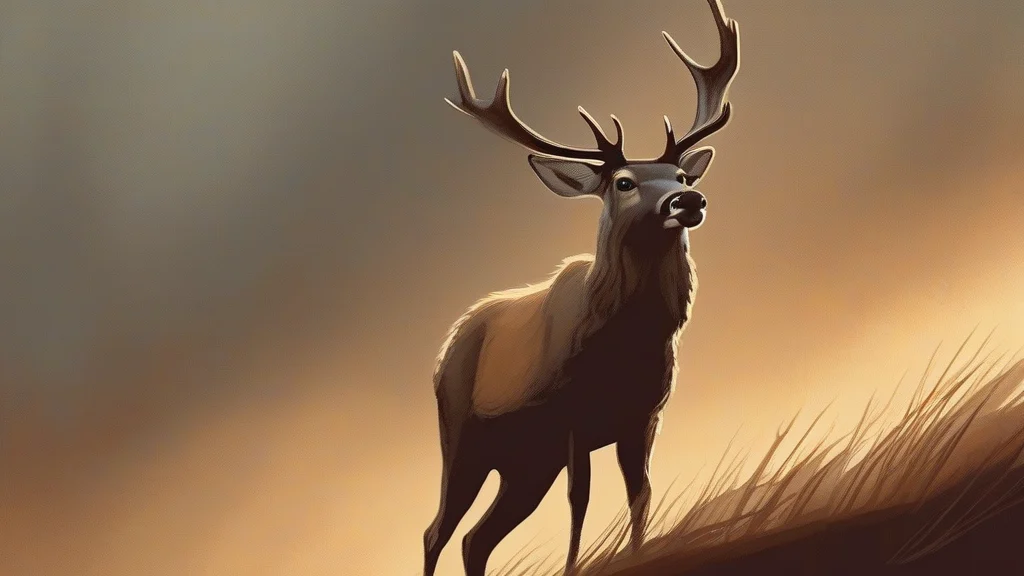
What does deerskin mean?
Deerskin is the leather produced from the hide of a deer, prized since ancient times for its exceptional softness, flexibility, and strength. Unlike many leathers, it becomes suppler rather than brittle when wetted and dried repeatedly, which has long made it the material of choice for gloves, moccasins, jackets, and traditional Indigenous garments across North America. The word also occasionally denotes the untanned hide of the animal itself. In modern usage, deerskin most often appears as an attributive noun — as in deerskin boots or deerskin driving gloves — signalling craftsmanship and comfort. Its cultural significance runs deep: deer hides were once a major trade commodity in colonial America, and the association between hides and money survives in the American slang term 'buck'. Today, deerskin remains associated with premium leather goods, artisanal work, and outdoor heritage, giving the word a warm, tactile connotation that sets it apart from ordinary leather.
Leather made from the hide of a deer, valued for its softness and durability.
"Her favorite pair of riding gloves was made from supple deerskin."
Most commonly used attributively before another noun (e.g., deerskin jacket).
The skin or hide of a deer, especially before tanning.
"The trapper traded several deerskins at the frontier post."
In this sense the plural 'deerskins' is common, referring to multiple individual hides.
The plural refers to multiple individual deer hides; the uncountable singular refers to the leather material itself.
"The trader stacked the cured deerskins along the cabin wall."
Deerskin was so essential to early American trade that entire colonial economies ran on it — the 'buck' as slang for a dollar traces back to deer hides used as currency.
Reviewed by Deb Chak, Editor. AI-assisted content curated by RJS Tech Solutions LLP.
Etymology of deerskin
Deerskin is a straightforward English compound formed from 'deer' plus 'skin', both words of Old English origin — 'dēor' meaning an animal (later narrowed to mean the specific animal), and 'scinn' meaning hide or covering. The compound arose naturally in Middle English to describe the animal's hide, and its use expanded as deer-hide leather became an important material for clothing and trade. It shares its transparent formation with parallel compounds like buckskin, sheepskin, and calfskin, all following the same Old English pattern of animal-plus-hide.
How deerskin is actually used
Deerskin is typically used attributively (as in deerskin gloves) rather than standing alone. It carries connotations of quality, softness, and natural craftsmanship, often appearing in contexts involving luxury goods, traditional crafts, and outdoor clothing. The plural form 'deerskins' refers to multiple individual hides rather than to the material generally.
Easily confused with deerskin
Buckskin specifically refers to leather from a male deer (or sometimes sheep) with the grain removed, while deerskin is leather from any deer hide.