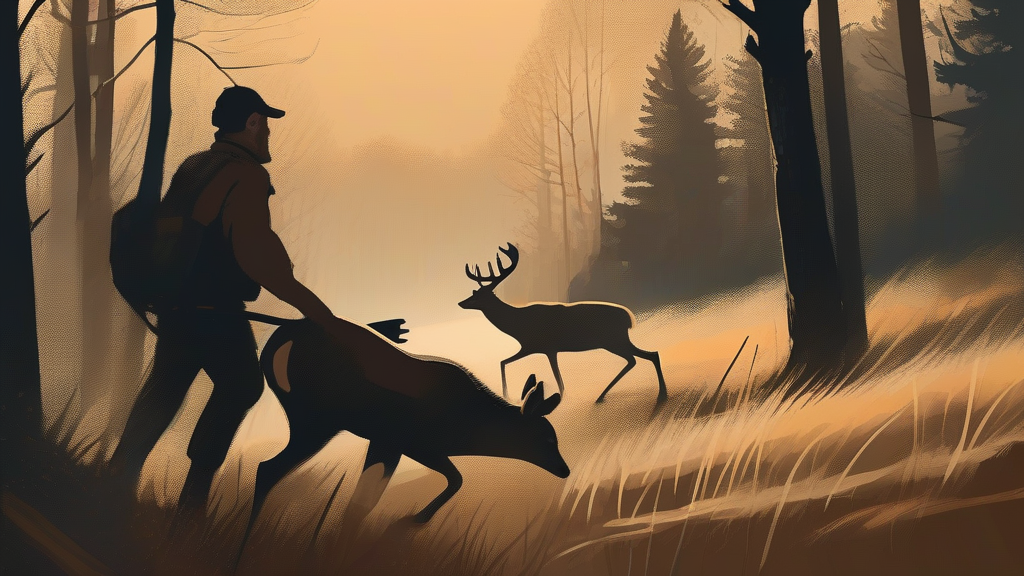
What does deerstalking mean?
Deerstalking refers to the practice of hunting deer, traditionally by approaching them carefully and silently on foot rather than waiting in ambush. It is particularly associated with the British Isles — especially the Scottish Highlands — where it has long been a structured country sport governed by seasons, licences, and estate traditions. The term connotes skill, patience, and fieldcraft: a successful stalk requires reading wind direction, moving quietly across open ground, and getting within accurate shooting range without alerting the animal. Beyond its literal sporting sense, the word occasionally appears figuratively to describe any stealthy, patient pursuit of a person or goal. A related noun, 'deerstalker', also names the tweed cap with front and rear brims worn by hunters and immortalised as Sherlock Holmes's signature headwear. In contemporary American English, 'deer hunting' is far more common, giving 'deerstalking' a distinctly British, somewhat traditional register.
nounThe activity or sport of hunting or stalking deer, especially on foot. It can also refer, by extension, to the stealthy pursuit of a person or goal.
- The practice or sport of hunting deer, typically by stealthily approaching them on foot.
- Figuratively, the act of quietly pursuing or stalking a person or objective.
"He spent every autumn in Scotland, where deerstalking remains a traditional pastime of the landed gentry."
"The estate offers guided deerstalking during the autumn rutting season."
"His years of deerstalking had taught him patience and an almost preternatural stillness."
Sherlock Holmes's famous hat is called a 'deerstalker' because it was designed for hunters who crept up on deer in the field — though the fictional detective never actually went hunting.
Reviewed by Deb Chak, Editor. AI-assisted content curated by RJS Tech Solutions LLP.
Etymology of deerstalking
The word 'deerstalking' is a straightforward English compound formed from 'deer' — an Old English word (dēor) that originally meant any wild animal before narrowing to mean the specific animal — and 'stalking', from the verb 'to stalk', which derives from Old English 'stealcian', meaning to walk cautiously or stealthily. The compound arose in the context of British country sports, becoming established terminology for the specific method of hunting red deer and other species on foot. Its cognates are largely within the Germanic family, reflecting the Old English roots of both components.
Related word forms
How deerstalking is actually used
The term is strongly associated with British country sports and Highland estates, where it is considered a formal, traditional activity rather than casual hunting. In American usage it is less common, with 'deer hunting' being the more usual term. The word carries a slightly old-fashioned, aristocratic connotation in modern speech.
Easily confused with deerstalking
A 'deerstalker' is most commonly known as a cap with ear flaps (famously associated with Sherlock Holmes), while 'deerstalking' refers to the activity of hunting deer.