What does defenseman mean?
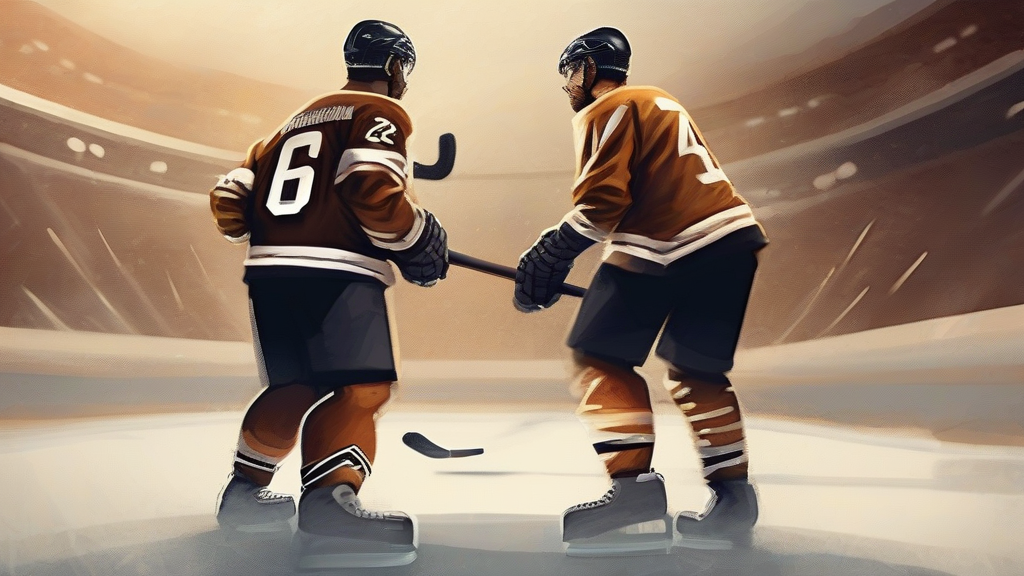
A defenseman is an athlete whose principal responsibility in a team sport — most prominently ice hockey, but also lacrosse and field hockey — is to stop opponents from scoring rather than to score themselves. Positioned between their own goal and the attacking forwards, a hockey defenseman guards the area around the blue line, blocks shots, breaks up passing plays, clears the puck from the defensive zone, and starts offensive plays with accurate outlet passes. The role rewards positional intelligence, physical strength, composure under pressure, and disciplined skating more than flashy goal-scoring skill. Within hockey culture, defensemen are often categorized by style: a "stay-at-home" defenseman emphasizes shot-blocking and physicality, while an "offensive" defenseman contributes heavily to attacks from the blue line. The word is spelled "defenseman" in North America and "defenceman" elsewhere, and it applies equally to male and female players.
nounA player, especially in ice hockey or lacrosse, whose primary role is to prevent the opposing team from scoring and to defend their own goal.
- A player positioned to defend the goal in ice hockey, typically playing near or behind the blue line.
- A player with similar defensive duties in other team sports such as lacrosse or field hockey.
"The veteran defenseman blocked the slap shot with his shin pad in the final minute of play."
"The rookie defenseman logged over twenty-five minutes of ice time in his NHL debut."
"She was named best defenseman at the national lacrosse championships."
The plural replaces "-man" with "-men". In British English, the spelling is "defencemen".
"Both teams iced six defensemen for the playoff series."
In hockey, the 'blue line' isn't just a stripe of paint — it's the border a defenseman patrols, which is why they're often called blueliners.
Reviewed by Deb Chak, Editor. AI-assisted content curated by RJS Tech Solutions LLP.
Etymology of defenseman
The word "defenseman" combines "defense," from Old French "defense" (ultimately from Latin "defensa", the feminine past participle of "defendere," meaning to ward off or protect), with "man," from Old English "mann." It arose as a compound sports term in the nineteenth century as organized team games codified fixed player positions, paralleling formations such as "lineman" and "goalkeeper." Its spelling follows regional conventions: American English uses "defenseman," while British English uses "defenceman."
Related word forms
How defenseman is actually used
The term is used almost exclusively in sports contexts. In North American English it is spelled "defenseman," while British English generally uses "defenceman." It applies to players of any gender. The informal term "blueliner" is common in hockey commentary because defensemen typically operate along the blue line.
Easily confused with defenseman
"Defenceman" is simply the British spelling of the same word, used chiefly outside North America; the meaning is identical.