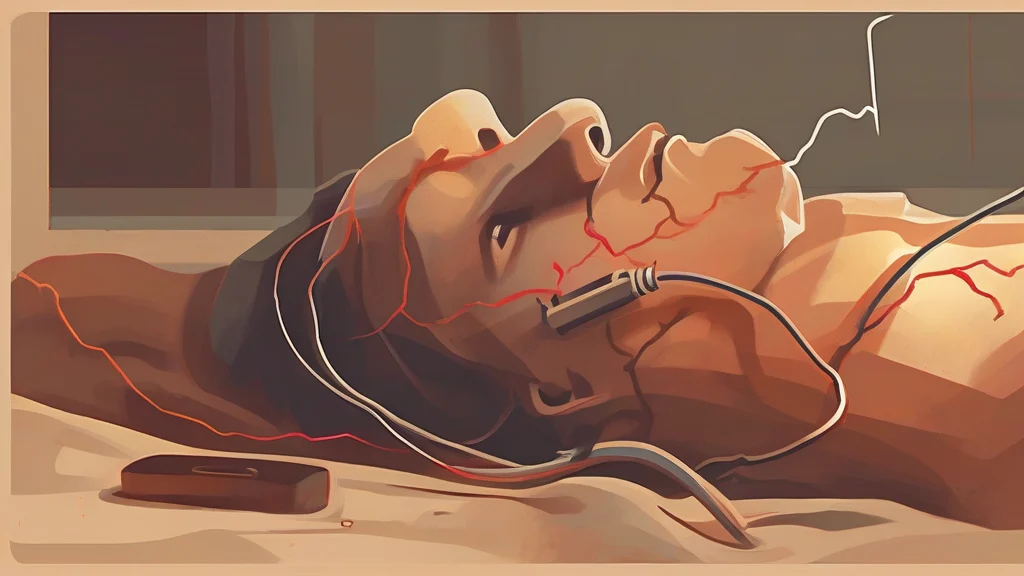
What does defibrillation mean?
Defibrillation is a medical procedure that uses an electric shock delivered to the chest to stop a dangerously irregular heartbeat — most commonly ventricular fibrillation, a chaotic rhythm that prevents the heart from pumping blood. It is the definitive emergency treatment for sudden cardiac arrest, where survival depends heavily on how quickly the shock is administered. Defibrillation may be performed with manual devices by trained clinicians, or with automated external defibrillators (AEDs), which are designed for public use and guide untrained bystanders through the process. The word derives from Latin roots meaning to remove fibres, referring to eliminating the disorganised twitching of heart muscle fibres. Closely related terms include fibrillation (the condition being treated) and cardioversion. Because rapid response saves lives, public access to AEDs has become widespread in airports, stadiums, and workplaces worldwide.
nounThe medical procedure of using an electric shock to restore a normal heartbeat, typically to treat ventricular fibrillation or cardiac arrest.
- The use of an electric shock to stop fibrillation and restore a normal heartbeat.
"Paramedics performed defibrillation within minutes of the patient's collapse, saving his life."
"Early defibrillation dramatically improves survival rates in out-of-hospital cardiac arrest."
"The hospital's new policy requires all nurses to be trained in immediate defibrillation."
Rarely pluralised; the word normally appears as an uncountable mass noun referring to the procedure. A plural form exists grammatically but is uncommon outside clinical contexts discussing multiple events.
"The patient required repeated defibrillations before a stable rhythm returned."
The first successful human defibrillation in 1947 used paddles on a 14-year-old boy's exposed heart during surgery — today an automated device talks you through every step.
Reviewed by Deb Chak, Editor. AI-assisted content curated by RJS Tech Solutions LLP.
Etymology of defibrillation
Defibrillation comes from the verb defibrillate, formed from the prefix de- ('removal of') plus fibrillation, which traces back to Latin fibra ('a fibre'). The term refers literally to stopping the fine, fibre-like twitching of heart muscle during ventricular fibrillation. It entered English in the late 19th century as experimental electrophysiology developed, becoming standard medical vocabulary after successful clinical use in the mid-20th century. Related words sharing the same root include fibril, fibrin, and fibrous.
Related word forms
How defibrillation is actually used
Defibrillation is a formal, technical medical term used in clinical settings, emergency medicine, and health journalism. It is not typically used colloquially; lay speakers more often refer to 'shocking' someone's heart or 'using a defibrillator' (the device). The word carries urgent, life-saving connotations.
Easily confused with defibrillation
Cardioversion is a broader term for restoring normal heart rhythm (which can be electrical or pharmacological), while defibrillation specifically refers to unsynchronized electric shock for life-threatening arrhythmias.
Fibrillation is the abnormal heart rhythm itself — rapid, chaotic contractions — whereas defibrillation is the treatment used to stop it.