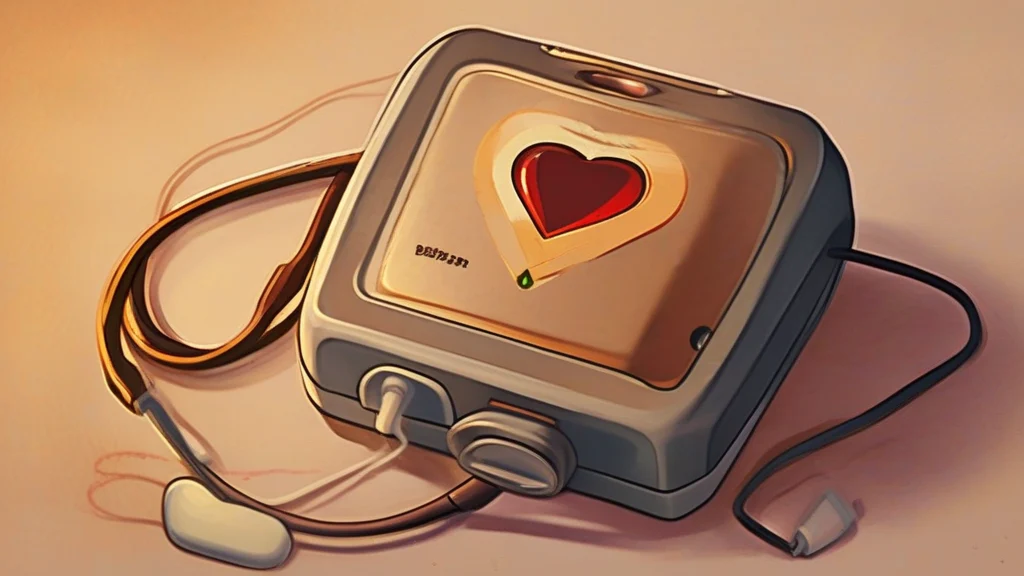
What does defibrillator mean?
A defibrillator is a medical device that delivers a controlled electric shock to the heart in order to restore a normal heartbeat. It is most often used during cardiac arrest, when the heart's electrical system malfunctions and its muscle fibers contract rapidly and chaotically — a condition known as ventricular fibrillation. The shock momentarily stops all electrical activity, allowing the heart's natural pacemaker to reassert control. Defibrillators come in several forms: automated external defibrillators (AEDs), which are designed for use by laypeople and are installed in public places such as airports and stadiums; manual units operated by trained medical staff; and implantable cardioverter-defibrillators (ICDs), small devices surgically placed inside the chest of patients at high risk of sudden cardiac arrest. The word derives from Latin roots meaning to stop the quivering of fibers, and its life-saving purpose has made it one of the most recognizable pieces of emergency medical equipment in the world.
nounA medical device that delivers an electric shock to the heart in order to restore a normal heartbeat, typically used to treat cardiac arrest or life-threatening arrhythmias such as ventricular fibrillation.
- A medical device that delivers an electric shock to the heart to restore normal rhythm, especially in cases of cardiac arrest or ventricular fibrillation.
- An implantable version of this device (an implantable cardioverter-defibrillator) fitted inside the chest of patients at risk of sudden cardiac arrest.
"The paramedics used a defibrillator to restart the patient's heart before transporting him to the hospital."
"An automated external defibrillator hung on the wall of the airport terminal, ready for any emergency."
"After two close calls, her cardiologist recommended an implantable defibrillator to protect her against sudden arrhythmia."
Regular plural formation; used when referring to multiple devices, such as AEDs installed across a facility.
"The hospital installed defibrillators on every floor of the building."
The word literally means 'un-fiber-maker' — it stops your heart's muscle fibers from twitching chaotically so they can beat in unison again.
Reviewed by Deb Chak, Editor. AI-assisted content curated by RJS Tech Solutions LLP.
Etymology of defibrillator
Defibrillator comes from the verb 'defibrillate', formed from the prefix 'de-' ('to reverse or remove') plus 'fibrillate', itself derived from 'fibrilla', the Latin diminutive of 'fibra' ('fiber'), referring to the fine muscle fibers of the heart that twitch uncontrollably during fibrillation. The term entered English in the early twentieth century alongside the development of electrical methods for treating cardiac arrhythmias. It shares its Latin root with related words such as 'fiber', 'fibril', 'fibrin', and 'fibrillation'.
Related word forms
How defibrillator is actually used
A formal but widely understood medical term; common abbreviations include AED (automated external defibrillator) and ICD (implantable cardioverter-defibrillator). The plural is regular: defibrillators.
Easily confused with defibrillator
A pacemaker continuously regulates slow heart rhythms with small electrical pulses, whereas a defibrillator delivers a single large shock to stop dangerous rapid rhythms.
'Fibrillator' is not a standard English word; the correct device name is 'defibrillator', whose prefix 'de-' indicates stopping fibrillation rather than causing it.