What does fibrin mean?
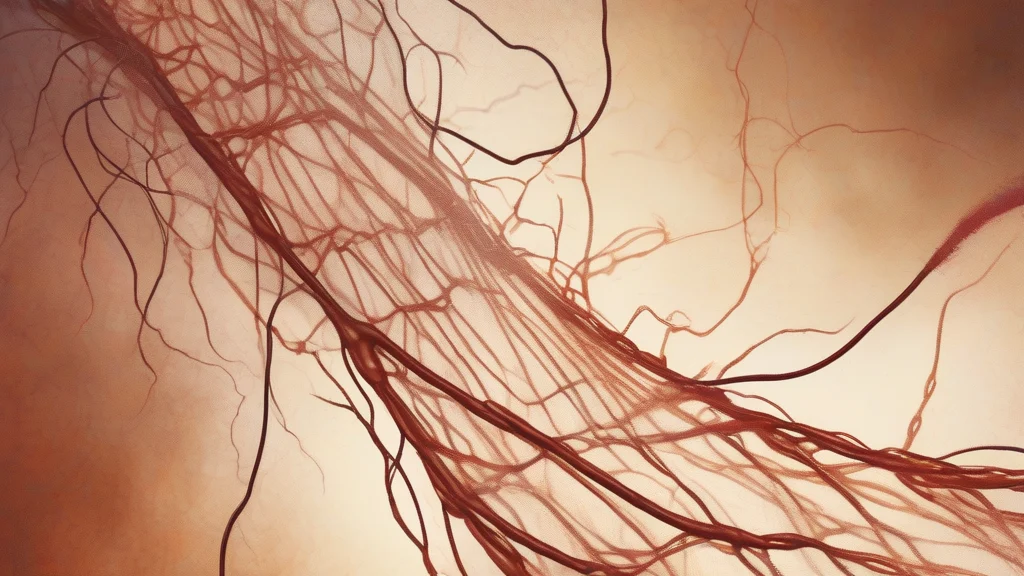
Fibrin is an insoluble, threadlike protein that lies at the heart of blood clotting. When a blood vessel is injured, an enzyme called thrombin converts a soluble plasma protein, fibrinogen, into fibrin, whose molecules link together into a tough mesh. This mesh traps platelets and blood cells, forming the solid clot that stops bleeding and later serves as a scaffold for wound healing. The word belongs chiefly to medicine and physiology, appearing in discussions of hemostasis, surgical sealants made from concentrated fibrin, and inflammatory conditions where fibrin is deposited on tissue surfaces. Derived ultimately from Latin fibra, meaning fiber, the name reflects the material's stringy appearance under the microscope. Though unfamiliar to many outside clinical settings, fibrin is essential to survival: without it, even minor wounds would not stop bleeding, making it one of the body's most vital proteins.
nounAn insoluble fibrous protein that forms a mesh of threads at the site of a wound, trapping blood cells to create a clot. It is produced when the enzyme thrombin acts on the soluble precursor fibrinogen in blood plasma.
- The insoluble fibrous protein formed from fibrinogen by the action of thrombin, which polymerizes into a mesh that forms the structural basis of a blood clot.
- A similar fibrinous material deposited in tissues or on membranes during inflammation.
"The surgeon watched as fibrin woven across the incision sealed the wound."
"A dense network of fibrin trapped the platelets and red cells, stemming the bleeding within minutes."
"Under the microscope, the inflamed membrane was coated with a layer of fibrin and inflammatory cells."
Fibrin is normally an uncountable mass noun; a plural such as 'fibrins' appears only rarely, typically in technical literature referring to different molecular forms or variants of the protein.
"Early researchers debated whether the different fibrins observed in various species were chemically identical."
Every scar you carry is held together by fibrin — the same protein that let 18th-century scientists first glimpse how blood turns from liquid into life-saving glue.
Reviewed by Deb Chak, Editor. AI-assisted content curated by RJS Tech Solutions LLP.
Etymology of fibrin
The word fibrin derives from Latin fibra, meaning 'a fiber', chosen because of the threadlike strands the protein forms when it polymerizes. The substance was identified and named around the end of the eighteenth century, when physiologists studying coagulation recognized that a distinct fibrous constituent separated out as blood clotted. The term shares its root with related coinages such as fibrinogen and fibrinolysis, and with older words like fiber, fibril, and fibrous that all trace back to the same Latin source.
Related word forms
How fibrin is actually used
Fibrin is a technical term used almost exclusively in medical, physiological, and laboratory contexts; it rarely appears in casual conversation. It is an uncountable substance noun in most usage, though it may be discussed in terms of amounts or deposits.
Easily confused with fibrin
Fibrinogen is the soluble plasma protein precursor that is converted into the insoluble fibrin during clotting.
Fiber is the general term for a threadlike structure or dietary material, whereas fibrin is one specific fibrous protein involved in blood coagulation.