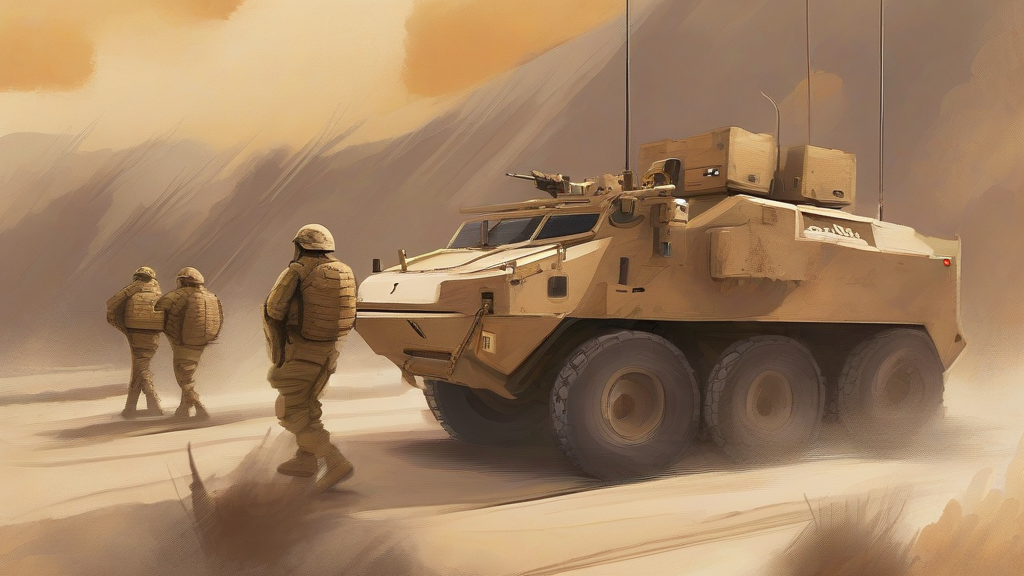
What does deployment mean?
Deployment refers to the act of putting something into position or into effective use, most often troops, equipment, or technical systems. Its oldest and still prominent sense is military: the deployment of forces describes moving soldiers and materiel into place for an operation. A closely related general sense covers the strategic use of any resource — money, skills, arguments — where effectiveness depends on how well they are positioned. Since the rise of modern computing, deployment has also become standard jargon for releasing software into a live environment, as in deploying an application to production servers. The word carries connotations of planning, coordination, and deliberate action; one does not casually deploy things. It is a formal-to-neutral term, common in journalism, defence writing, and technology, and less frequent in casual conversation, where plainer alternatives such as 'use' often serve instead.
nounThe action of bringing something into effective use or positioning it for service, especially troops, equipment, or resources. In computing, the process of putting a program or system into operation in its working environment.
- The act of moving troops or equipment into position for military action or service.
- The act of putting a resource, skill, or measure to practical use.
- In computing, the process of making a software application or system available for use in its target environment.
"The deployment of additional troops to the border was completed within days."
"The rapid deployment of peacekeeping forces helped stabilise the region."
"Careful deployment of the team's limited budget made the project possible."
The plural is used mainly for multiple distinct military tours of duty or separate rollouts of systems or measures; it is uncommon in the abstract sense.
"Veterans of multiple overseas deployments were honoured at the ceremony."
Before soldiers and software, 'deploy' meant to unfold a battle formation — it comes from French déployer, literally to un-fold.
Reviewed by Deb Chak, Editor. AI-assisted content curated by RJS Tech Solutions LLP.
Etymology of deployment
Deployment derives from the verb deploy, which entered English in the late 16th century from French déployer, meaning to unfold or spread out, itself from Latin displicare — dis- ('apart') combined with plicare ('to fold'). The word's original sense of unfolding a battle line from column into extended formation gave rise to the broader modern senses of positioning troops and, later, putting resources or software to work. It shares this folding root with words such as display, employ, and exploit, all ultimately traceable to Latin plicare.
How deployment is actually used
Formal-to-neutral register. Most strongly associated with military and technical (especially IT/software) contexts; in everyday speech, simpler words like 'use' are often preferred. The plural is rare and typically appears only when referring to multiple distinct instances of stationing or rollout.
Easily confused with deployment
'Employ' is the verb meaning to hire or make use of someone or something, while 'deployment' is the noun describing the act of positioning or putting into action, especially in military or technical contexts.