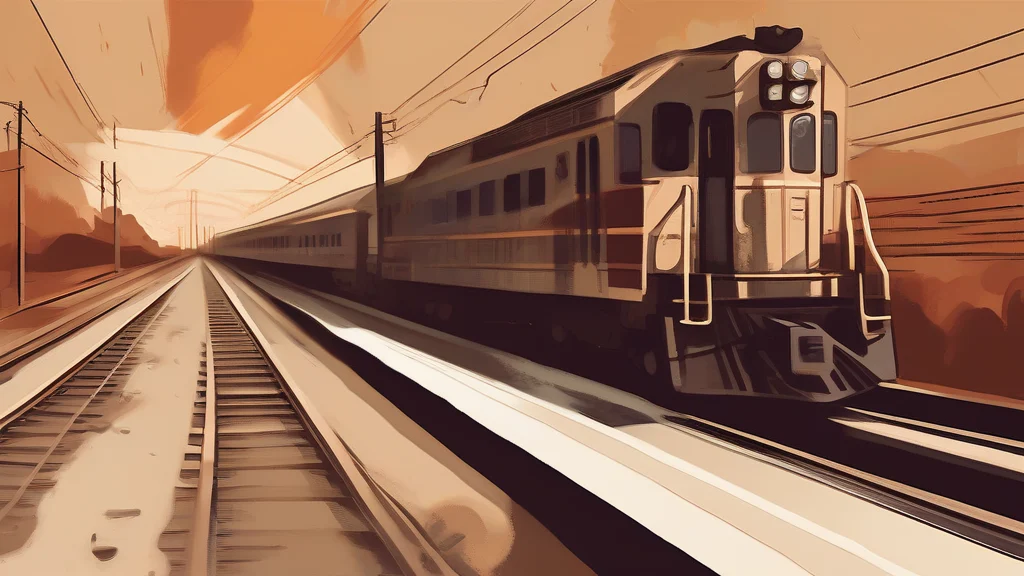
What does derail mean?
To "derail" is to cause something to leave its intended course. In its original, literal sense it describes a train that runs off its rails — a sudden, often dramatic accident. Since the mid-twentieth century the word has developed a powerful figurative life: negotiations can be derailed by a single disagreement, a political campaign by a scandal, a promising career by one poor decision, or a casual conversation by an ill-timed remark. The figurative use carries the vividness of the railway image — the sense of forward momentum brought abruptly and messily to a stop — which is why it appears so frequently in news reporting and business writing. Related forms include the noun "derailment," which typically denotes the actual event, whether literal or metaphorical. Concise and evocative, "derail" remains one of the most useful verbs for describing plans and processes that go suddenly and irreversibly wrong.
verbTo cause a train to run off its tracks, or figuratively to obstruct, disrupt, or bring a plan, process, or discussion to an abrupt halt.
- (Of a train) to run off its rails.
- (Figurative) to cause a plan, project, discussion, or career to fail or be interrupted.
"A last-minute objection from the board threatened to derail the entire merger."
"The freight train derailed near the river crossing, spilling cargo across three tracks."
"One leaked email was enough to derail months of delicate peace negotiations."
Every time you say a scandal 'derailed' a career, you're borrowing language straight from the railways — the word was born when trains first began jumping their tracks.
Reviewed by Deb Chak, Editor. AI-assisted content curated by RJS Tech Solutions LLP.
Etymology of derail
"Derail" comes from French "dérailler," formed from "dé-" (expressing removal or undoing) plus "rail." It entered English in the nineteenth century alongside railway technology itself, first used literally for trains leaving the track. The figurative sense — plans and processes being knocked off course — became widespread in the twentieth century and is now the dominant use. The root "rail" ultimately traces back through French to Latin "regula," meaning a straight bar or rule, making "regulate" and "rule" distant cousins of "derail."
Related word forms
How derail is actually used
"Derail" is neutral to slightly negative in connotation and works in both formal journalism and everyday speech. Its figurative sense — for plans, careers, or conversations going off course — now dominates usage far more than the literal railway sense.
Easily confused with derail
"Detail" refers to a small individual feature or item, while "derail" means to knock something off course — they differ by just one letter but share no meaning.