What does derailed mean?
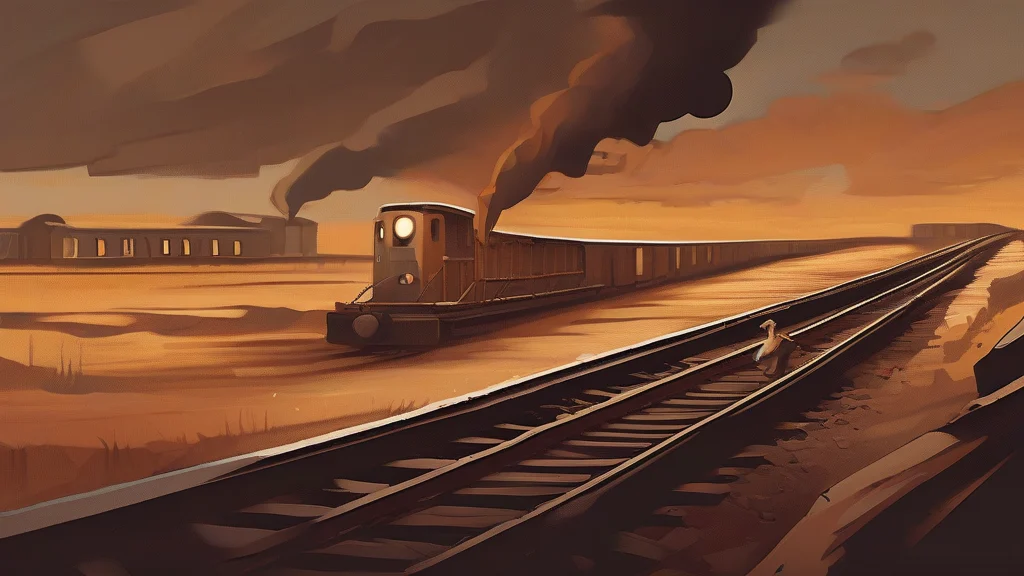
"Derailed" is the past tense and past participle of the verb "derail," which has both a literal and a widely used figurative meaning. In its literal sense, a train or tram that has derailed has left its tracks, often with dramatic or dangerous consequences — this usage appears frequently in news reports of rail accidents. Far more common in ordinary conversation is the figurative sense: plans, negotiations, careers, and projects are said to have been derailed when something sudden and disruptive knocks them permanently off course. The word carries a connotation of abrupt, often irreversible interruption rather than mere delay, and it typically appears in the passive voice ("the talks were derailed"), underscoring that outside forces were responsible. Derived from French "dérailler," built on "de-" plus "rail," the term entered English in the nineteenth century alongside railway technology itself. Its vividness makes it a favorite of journalists and commentators describing anything that has gone decisively wrong.
verbPast tense and past participle of "derail": (of a train) to run off its tracks, or (figuratively) to cause a plan, process, or career to be abruptly disrupted and prevented from progressing.
- (of a train or tram) ran off or left its rails unexpectedly.
- (figurative) caused a plan, process, discussion, or career to be suddenly disrupted and prevented from proceeding as intended.
"The negotiations were derailed by last-minute demands from both sides."
"A freight train derailed outside the station, blocking both lines for hours."
"Her promising legal career was derailed by an unexpected scandal."
The "rail" in "derailed" traces back to Latin regula — a straight bar or rule — so to derail is, quite literally, to come off the rule.
Reviewed by Deb Chak, Editor. AI-assisted content curated by RJS Tech Solutions LLP.
Etymology of derailed
The verb "derail" comes from French "dérailler," formed from "de-" (expressing removal) plus "rail," the metal track on which trains run. The French "rail" itself derives from "reille," meaning an iron bar, which traces back through Provençal to Latin "regula," a straight bar or rule. The English verb appeared in the mid-nineteenth century, coinciding with the rapid expansion of railways, and quickly developed its figurative sense of knocking something off course.
Related word forms
How derailed is actually used
Most often used in the passive in figurative contexts ("was derailed"), which emphasizes that an external force caused the disruption. The literal railway sense is common in news reporting; the figurative sense dominates everyday speech.
Easily confused with derailed
"Deranged" means insane or wildly disordered, while "derailed" means knocked off course or off its tracks.