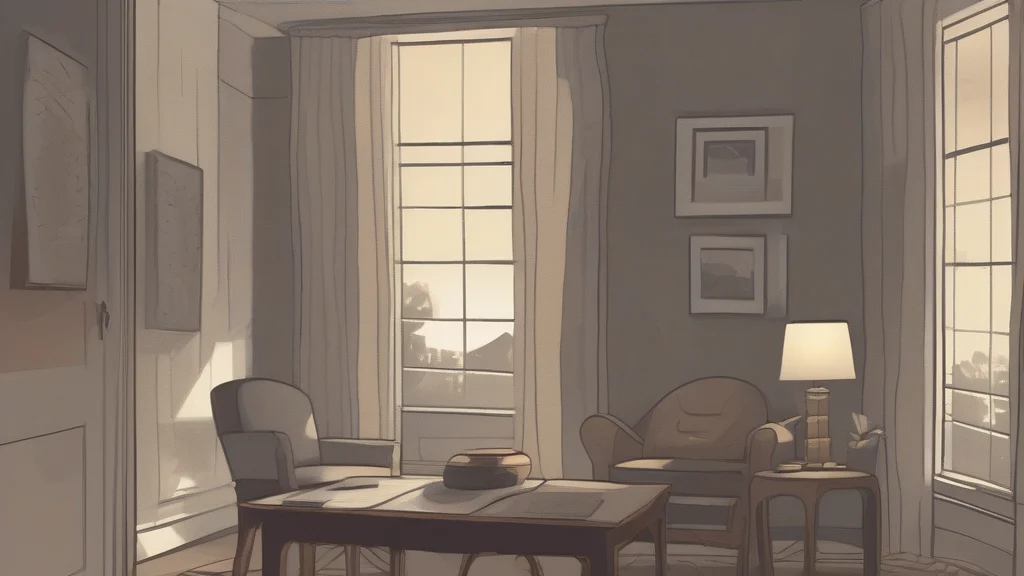
What does desaturated mean?
Desaturated describes something from which saturation — the intensity or purity of color — has been removed or reduced, leaving tones that are muted, washed-out, or close to gray. The term comes from photography, film, and color science, where reducing saturation is a standard editing technique used to soften hues without converting an image fully to black and white. A desaturated image keeps its tonal relationships intact but loses its vividness, an effect often used to convey bleakness, nostalgia, memory, or documentary-style realism. Beyond images, the word appears figuratively in criticism and everyday description to suggest something drained of energy or brilliance, as in a desaturated portrait of city life. It is the past participle of the verb "desaturate," formed by adding the reversal prefix "de-" to "saturate," which derives from the Latin "saturare," meaning to fill or sate. Related forms include "desaturation" and "desaturate."
adjectiveHaving had color or saturation removed or reduced; drained of vividness or intensity. Most commonly used of images, film, and color palettes rendered in muted tones approaching gray.
- (Of colors, images, or light) reduced in saturation; having color intensity removed so that tones approach gray.
- (Figuratively, less common) drained of vitality, intensity, or vividness.
"The film's desaturated palette gave the war scenes a bleak, documentary-like realism."
"The photographer desaturated the sky in post-processing to emphasize the silhouetted figures."
"The novel paints a desaturated portrait of suburban life, stripped of all glamour."
Every time a filmmaker drains the color from a scene to make it feel grim and real, they're literally 'un-saturating' it — using a word rooted in the Latin for 'to fill up' by describing emptying.
Reviewed by Deb Chak, Editor. AI-assisted content curated by RJS Tech Solutions LLP.
Etymology of desaturated
Desaturated is formed from the verb "desaturate," which combines the Latin-derived prefix "de-" (indicating removal or reversal) with "saturate," from the Latin "saturare," meaning to fill full or sate, itself from "satur," meaning full or well-fed. English adopted "saturate" in the16th century, and its use in color science — describing the intensity of a hue — developed later. The term "desaturated" emerged as photographers and colorists needed a precise way to describe colors from which intensity had been withdrawn.
Related word forms
How desaturated is actually used
Primarily a technical term from color science, photography, and film grading, though it has spread into general critical writing about visual media and figurative description. It functions chiefly as an adjective (the past participle of the verb "desaturate") and carries a neutral-to-bleak connotation: desaturated visuals often suggest austerity, memory, melancholy, or realism.
Easily confused with desaturated
Saturated describes colors at full intensity and richness, while desaturated describes colors from which intensity has been removed, leaving muted grayish tones.