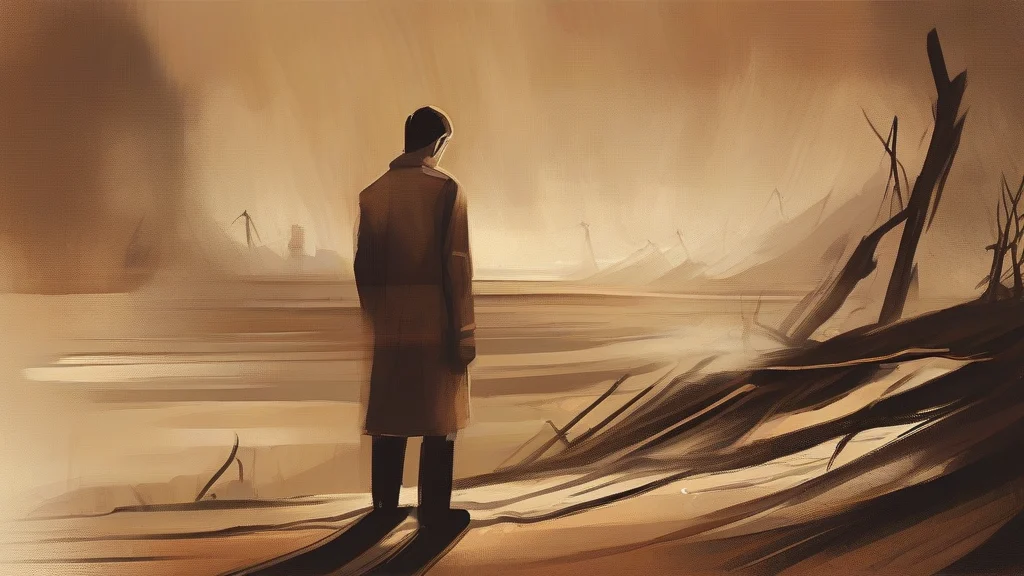
What does desperate mean?
Desperate is an adjective describing a state of urgent, almost frantic need or hopelessness — a feeling so intense that normal caution is abandoned. A person may be desperate for money, love, sleep, or escape; a situation may be desperate when it has grown severe enough that only drastic action offers any chance of success. The word implies both intensity and risk: the desperate person is willing to gamble everything because the alternative seems unbearable. It derives from the Latin desperare, 'to be without hope', and entered English via Old French in the medieval period. Today it is among the most emotionally charged adjectives in everyday English, appearing constantly in journalism, fiction, and personal narrative to signal crisis, longing, or extremity. Its noun form, desperation, and its adverb, desperately, are equally common and share this same sense of urgent, last-resort intensity.
adjectiveFeeling or showing a hopeless sense that a situation is so bad as to be impossible to deal with; having an urgent need or desire so strong that one will take extreme risks to satisfy it.
- Having an urgent need or desire so great that one will try anything to fulfil it.
- Involving or showing reckless abandon because of despair or urgency.
- (of a situation) Extremely serious or dangerous; beyond remedy.
"After months without work, she was desperate for any job she could find."
"He made a desperate attempt to grab the rope before it slipped away."
"The refugees grew desperate for food and shelter."
The word 'desperate' literally traces back to the Latin 'de-sperare' — meaning simply, 'to have no hope left.'
Reviewed by Deb Chak, Editor. AI-assisted content curated by RJS Tech Solutions LLP.
Etymology of desperate
Desperate comes from the Latin desperatus, the past participle of desperare, formed from de- ('away from') and sperare ('to hope'). The word passed into English through Old French desespere and has been used since Middle English to describe those who have abandoned hope. It shares its Latin root with despair and desperation, all carrying the same core idea of hopelessness.
Related word forms
How desperate is actually used
'Desperate' carries strong emotional weight and often implies loss of rational restraint. It can describe both people (a desperate man) and situations (a desperate situation). In informal speech it can also carry a mildly negative social connotation, suggesting someone who wants something so badly they have abandoned their dignity.
Easily confused with desperate
'Despaired' is the past tense of the verb 'to despair' (to lose hope), while 'desperate' is an adjective describing someone who has lost hope or acts recklessly out of urgency.