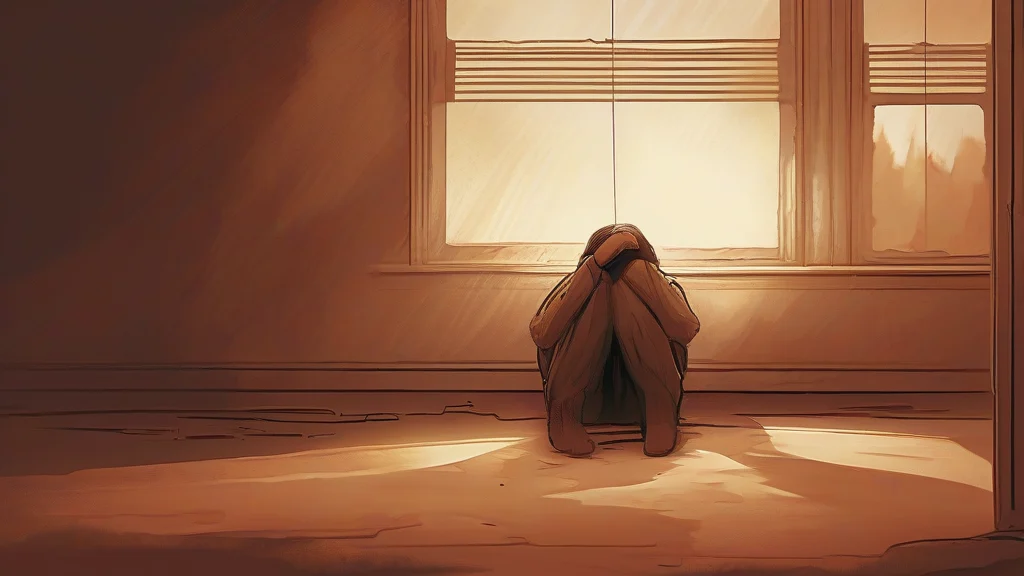
What does despairing mean?
"Despairing" is an adjective describing someone or something that shows or feels the complete loss of hope. It typically appears before nouns that express outward signs of inner anguish — a despairing look, a despairing cry, a despairing gesture — making it especially common in narrative and descriptive writing. The word carries strong emotional weight and a literary register; it suggests not just disappointment but a settled conviction that things cannot improve. A character who makes a despairing attempt has given up expecting success but tries anyway, while a despairing parent or friend conveys anguish on another's behalf. Related forms include the verb "to despair" and the adverb "despairingly." Because it names one of the most profound human emotional states, "despairing" remains a valuable word for writers seeking precision and gravity beyond simpler terms like "sad" or "upset."
Showing or feeling that all hope is lost; expressing utter hopelessness.
"With a despairing shake of his head, he closed the folder and left the office."
Present participle of the verb "despair": to lose all hope or confidence.
"After months without news, they were beginning to despair of ever seeing him again."
This verbal use typically takes the preposition "of": to despair of something.
The word "despair" literally means being "without hope" — from Latin "sperare," to hope. To be despairing is to be, etymologically speaking, hope-less in the purest sense.
Reviewed by Deb Chak, Editor. AI-assisted content curated by RJS Tech Solutions LLP.
Etymology of despairing
"Despairing" derives from the verb "despair," which entered English via Old French "desperer" from Latin "desperare," meaning "to be without hope" — a combination of "de-" (away from) and "sperare" (to hope). The same Latin root "sperare" also gives English words such as "desperate," "desperation," and "prosper," and connects ultimately to "spirit" through the related root "spirare." As a participial adjective, "despairing" has been used since Middle English to describe both the feeling of hopelessness and its outward expression.
Related word forms
How despairing is actually used
"Despairing" is more literary and formal than everyday alternatives like "hopeless." It most often modifies nouns denoting expressions, gestures, or sounds (look, glance, cry, sigh), conveying visible outward signs of inner hopelessness rather than merely stating an internal state.
Easily confused with despairing
"Despairing" describes a state of having lost hope, while "desperate" often implies urgent, frantic action taken because of that loss of hope.