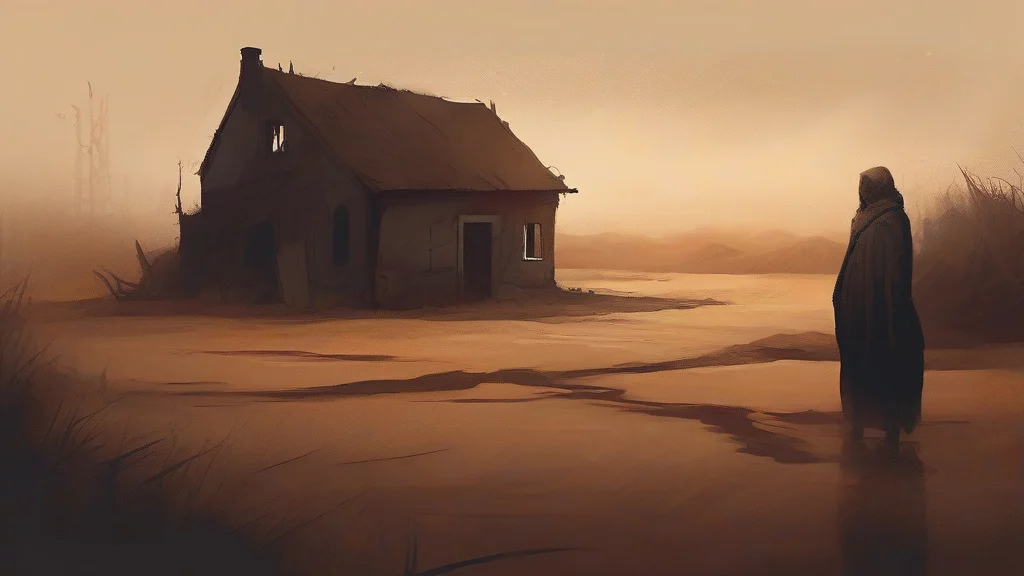
What does forlorn mean?
Forlorn describes a state of pitiable loneliness, sadness, or abandonment — whether applied to people, animals, or even places and objects. A forlorn child might stand alone at a party; a forlorn cottage might sit derelict in a windswept field. The word carries a heavy emotional charge, suggesting not merely unhappiness but a sense of being left behind or forgotten, and it often invites sympathy from the observer. In modern usage it appears most often as an adjective describing expressions, looks, figures, and hopes. Its best-known idiom, 'a forlorn hope,' has a surprising history: it originally referred to a body of soldiers assigned an extremely dangerous mission with little chance of survival, derived from a Dutch term meaning a lost troop rather than an emotion. Today, however, the phrase simply denotes a slim or desperate chance of success. Both poignant and versatile, forlorn remains a favorite of writers seeking to evoke desolation.
adjectivePitifully sad and abandoned or lonely; appearing desolate and hopeless.
- Describing someone or something as pitifully lonely, sad, or abandoned.
- (Of a place or thing) appearing bleak, deserted, or neglected.
- (Archaic/nautical) denoting a person banished or shipped off to a remote place, e.g. 'forlorn of all comfort' in older usage.
"The forlorn house stood at the end of the lane, its windows boarded and its garden gone to seed."
"She gave him a forlorn glance before turning away."
"A single forlorn chair sat in the middle of the empty room."
"Forlorn hope" isn't a feeling — it's the name of a real military unit sent on near-suicidal missions, borrowed almost unchanged from a Dutch phrase meaning "lost troop."
Reviewed by Deb Chak, Editor. AI-assisted content curated by RJS Tech Solutions LLP.
Etymology of forlorn
Forlorn derives from the Old English verb 'forleosan,' meaning to lose completely or destroy, formed from the prefix 'for-' plus the Germanic root '*leus-' that also gave English 'lose.' Originally a past participle meaning 'lost' or 'deprived,' it gradually shifted to describe those who were bereft and abandoned, hence sorrowful. It is thus closely related to words like 'loss' and the archaic 'leese' (to lose), and it entered idiomatic English through the Dutch-derived military phrase 'verloren hoop,' which became 'forlorn hope.'
Related word forms
How forlorn is actually used
Literary in flavor but common in everyday speech; carries strong pathos and often implies both emotional desolation and physical abandonment. Frequently used attributively ('a forlorn figure'). The phrase 'a forlorn hope' is now the standard idiom for a faint, almost hopeless chance.
Easily confused with forlorn
"Forsworn" means having sworn falsely or broken an oath, while "forlorn" describes sadness and abandonment.