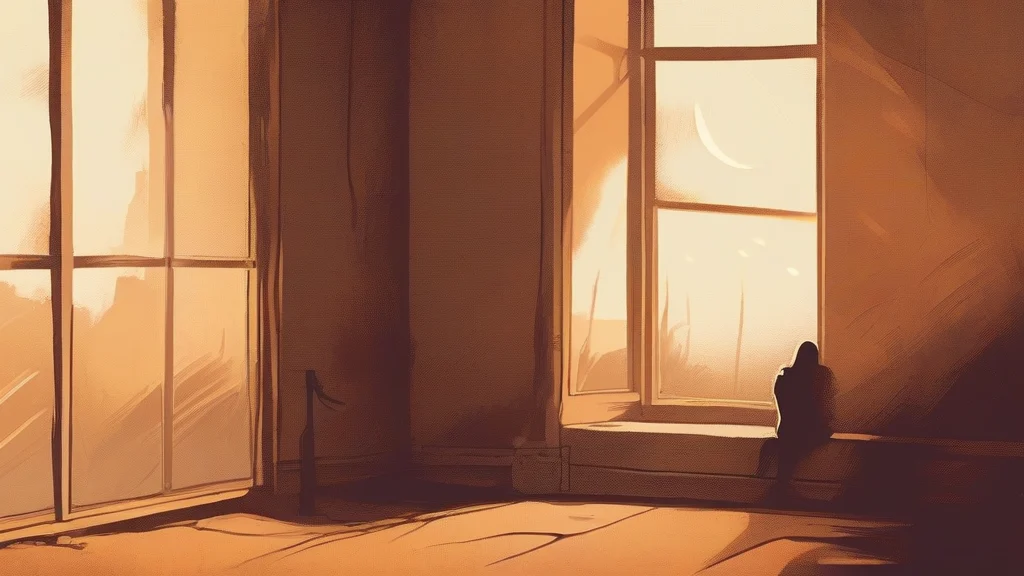
What does forlornly mean?
Forlornly is an adverb meaning 'in a forlorn manner' — that is, acting or appearing sad, lonely, or abandoned. A dog might gaze forlornly out of a window; a derelict building might stand forlornly at the edge of a field. The word derives from the adjective 'forlorn', which historically meant not merely unhappy but literally forsaken or left behind, giving the adverb a stronger sense of desolation than ordinary sadness conveys. In modern usage it colours descriptions of people, animals, and even objects, lending scenes a poignant air of hopelessness. It belongs chiefly to literary and descriptive writing rather than casual speech, where simpler terms like 'sadly' usually suffice. Its enduring appeal lies in this evocative weight: to do something forlornly is to do it as though no one were coming to help.
adverbIn a manner that is sad, hopeless, or abandoned; done with or expressing a sense of being deserted and forlorn.
- In a sad, lonely, or hopeless manner, conveying abandonment or despair through appearance or behaviour.
"The dog gazed forlornly out the window, waiting for an owner who never returned."
"She stood forlornly on the empty platform long after the train had gone."
"The abandoned house stared forlornly across the fields, its windows dark and broken."
'Forlorn' once meant 'abandoned' in the most literal military sense — a soldier sent 'forlorn hope' first into battle had little expectation of returning.
Reviewed by Deb Chak, Editor. AI-assisted content curated by RJS Tech Solutions LLP.
Etymology of forlornly
Forlornly derives from the English adjective 'forlorn', meaning abandoned or wretched. 'Forlorn' itself comes from Middle English, borrowed from Old Norse 'fyrirgefin'-related usage via forms meaning lost or forfeited, and the word gained its modern sense partly through the phrase 'forlorn hope', the name given to soldiers sent ahead on near-suicidal missions. The adverbial suffix '-ly' attaches to the adjective in the standard way, yielding a word whose lineage runs back through Germanic roots concerned with loss and desertion.
Related word forms
How forlornly is actually used
Forlornly is used almost exclusively to describe manner — how someone or something looks or acts — and carries an inherently melancholy connotation. It appears more often in descriptive or literary prose than in everyday conversation, where speakers may simply say 'sadly' or 'miserably'. It is frequently applied to animals and neglected places as readily as to people.
Easily confused with forlornly
Forlorn is the adjective describing something sad and abandoned, while forlornly is the adverb describing the manner of an action performed in that way.