
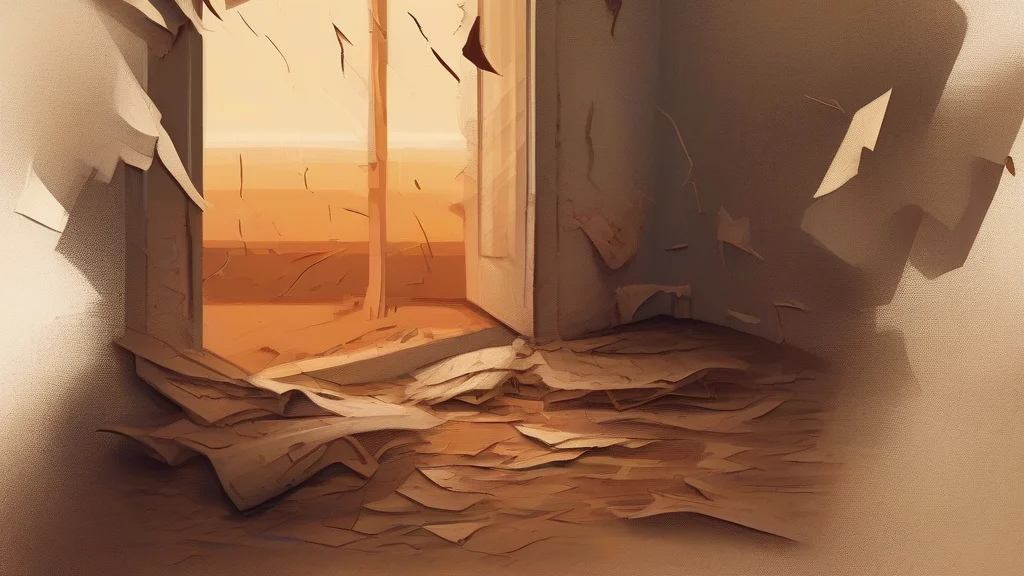
What does torn mean?
Torn describes something that has been ripped, split, or otherwise damaged, as in a torn shirt or a torn page. It is also used figuratively for a person who is emotionally divided, especially when pulled between two choices: “She was torn between two careers.” The word is the past participle of tear and functions as both an adjective and a participle in sentences such as “The envelope was torn.” Its figurative use conveys not merely indecision but an emotional conflict, suggesting that two desires or obligations seem equally compelling. Torn is a familiar, flexible word in formal writing, journalism, literature, and everyday speech, and its literal and emotional meanings make it useful for describing both physical damage and inner struggle.
Split, ripped, or otherwise damaged by being pulled apart; emotionally divided or conflicted.
"The child was holding a torn photograph."
The physical and emotional senses are both standard. “Torn between” is an especially common idiomatic expression.
The past participle of tear, used in perfect and passive constructions.
"Several pages were torn from the book."
In this use, torn follows forms of have or be: “The page has been torn” or “The page was torn.”
Torn does double duty: it can describe paper ripped apart and a person unable to choose between two hearts.
Reviewed by Deb Chak, Editor. AI-assisted content curated by RJS Tech Solutions LLP.
Where does torn come from?
Torn is the past participle of tear, whose verb descends from Old English teran, meaning “to tear” or “rend.” The modern form developed through the regular Germanic verb system. Related Germanic forms include Dutch teren and German reißen, both associated with tearing or ripping.
Related word forms
How torn is actually used
Torn is standard in both formal and informal English. Its emotional sense is especially common in the idiom “torn between,” while its physical sense is usual in descriptions of paper, fabric, clothing, or objects that have been ripped.
Easily confused with torn
Tore is the simple past tense of tear, as in “She tore the paper,” while torn is the past participle and adjective form, as in “The paper was torn.”