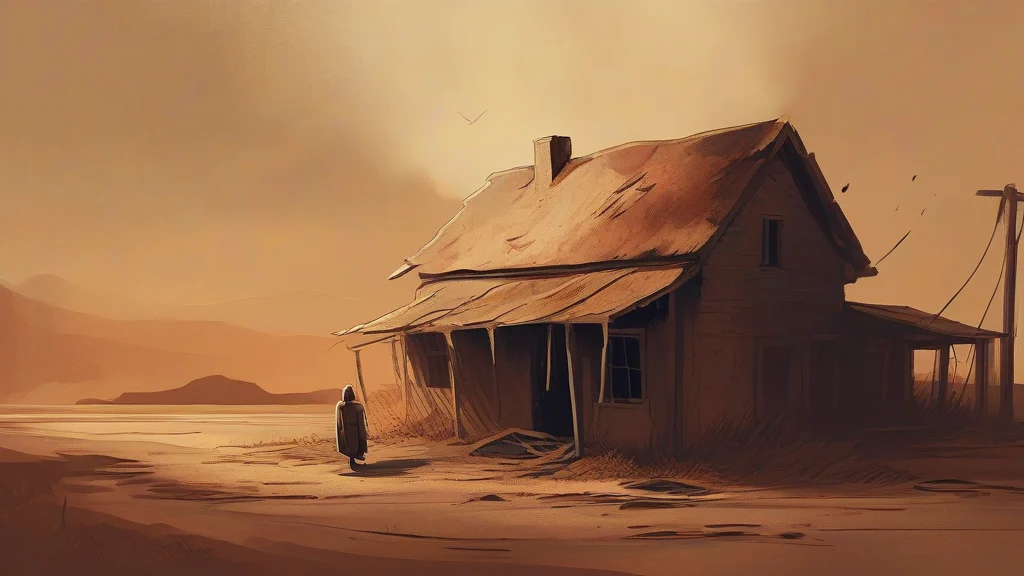
What does forsaken mean?
"Forsaken" describes something or someone that has been abandoned or deserted, particularly by a person who was expected to offer care, love, or protection. Derived from the verb "forsake," it functions chiefly as an adjective and as that verb's past participle, appearing in phrases such as "a forsaken village," "forsaken by her friends," or "he felt forsaken by fate." The word carries heavy emotional weight: it suggests not mere forgetfulness but a conscious turning away, leaving behind loneliness, betrayal, and ruin. For this reason it appears often in literature, poetry, and religious texts — the cry of feeling forsaken is among the most poignant expressions of despair in English. While closely related words like "abandoned" or "deserted" cover similar ground, "forsaken" is more charged and formal, lending gravity to descriptions of neglected places, broken relationships, and lost hope.
Abandoned, deserted, or renounced by someone who was expected to care for or remain loyal to the person, place, or thing left behind.
"The lighthouse stood forsaken on the cliff, its lamp dark for fifty years."
Often used predicatively as well as attributively, e.g. "she felt forsaken" or "a forsaken building."
The past participle of the verb "forsake," used to indicate that someone or something has been abandoned or given up.
"By the end of the novel, every ally had forsaken him."
In this function it typically follows forms of "have" or "be," as in "has forsaken" or "was forsaken."
"Forsaken" literally means "counter-sought" — the Old English prefix *for-* turned the act of seeking into an act of complete abandonment.
Reviewed by Deb Chak, Editor. AI-assisted content curated by RJS Tech Solutions LLP.
Etymology of forsaken
"Forsaken" comes from "forsake," which descends from Old English "forsacan," formed from the prefix "for-" (indicating negation or undoing) plus "sacan," meaning to dispute or take legal action against — so the original sense involved renouncing or casting off. The verb and its participle have been part of English since the Old English period, and the religious resonance of being "forsaken" by God was reinforced by early translations of the Bible. Related Germanic verbs with the same "for-" prefix include "forgo" and "forbear," all sharing the sense of holding back or doing without.
Related word forms
How forsaken is actually used
"Forsaken" is a literary and somewhat formal word, more common in fiction, poetry, and religious writing than everyday conversation. Its connotation is strongly negative and emotive, evoking desolation rather than simple absence; lighter situations call for words like "abandoned" or "left."
Easily confused with forsaken
"Forgotten" means merely slipped from memory, while "forsaken" implies a deliberate act of abandoning someone or something.
"Forsake" is the verb meaning to abandon, whereas "forsaken" is its past participle used to describe what has been abandoned.