What does detrained mean?
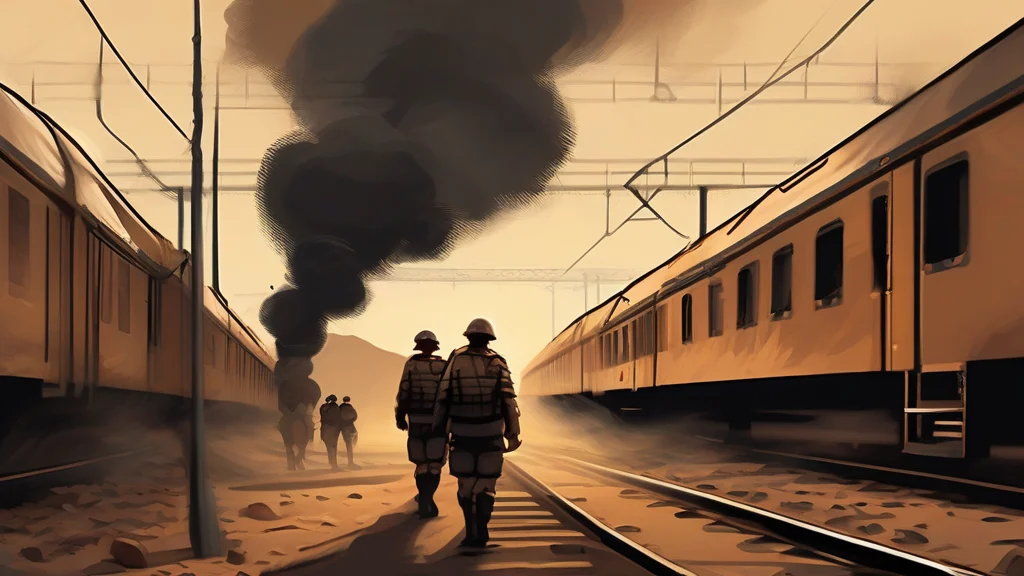
"Detrained" is the past tense of the verb "detrain," meaning to get off or leave a train. The word belongs largely to formal and especially military language: dispatches, timetables, and regimental histories routinely record that troops "detrained" at a given station before moving on foot or by other transport. In ordinary modern usage it has been almost entirely displaced by everyday phrases like "got off the train," which gives "detrained" a distinctly period flavor — it tends to evoke early twentieth-century railway travel, wartime troop movements, and the organized choreography of mass transit. The verb was formed by adding the prefix "de-" (indicating removal or reversal) to "train," paralleling its counterpart "entrain," meaning to board a train. Though uncommon today, "detrained" survives in historical writing, logistics documentation, and contexts where precision about rail travel matters, making it a useful word for anyone reading military history or vintage accounts of railway journeys.
verbPast tense and past participle of "detrain": to get off or disembark from a train, especially of troops leaving a train in formation.
- To have disembarked from a train, especially as part of an organized group such as troops.
"The soldiers detrained at dawn and marched straight to the front."
"The battalion detrained at a small siding outside the town."
"Passengers detrained slowly, stiff after the long overnight journey."
Military orders once told thousands of men to 'detrain' — a verb so official it sounds like it was issued by a timetable.
Reviewed by Deb Chak, Editor. AI-assisted content curated by RJS Tech Solutions LLP.
Etymology of detrained
The verb "detrain" was formed in English by combining the prefix "de-" (from Latin, indicating reversal or removal) with "train," itself derived via Old French "trahiner" from Latin "trahere," meaning "to pull or draw." It arose in the nineteenth century alongside railways and became standard military terminology for unloading troops from trains, with "entrain" serving as its opposite. Cognates trace back through French to the Latin root "trahere," which also produced words like "trait," "entourage," and "retinue."
Related word forms
How detrained is actually used
Chiefly formal or military register; rare in everyday speech, where "got off the train" is preferred.
Easily confused with detrained
"Detained" means held back or kept in custody, while "detrained" means having gotten off a train.