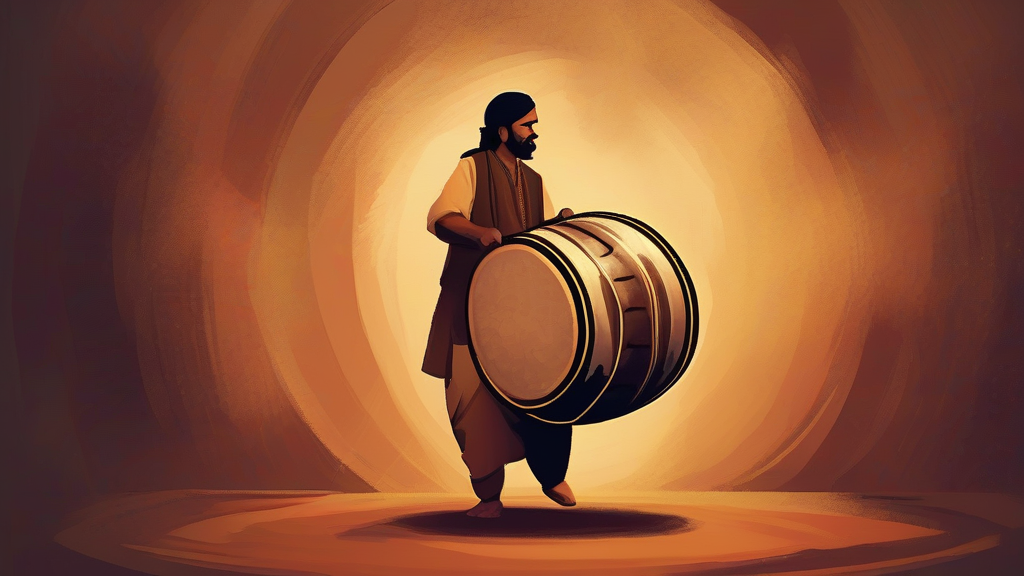
What does dhol mean?
A dhol is a large, barrel-shaped drum with two heads of different sizes, originating in the Punjab region of South Asia. The larger head produces a deep bass tone and is struck with a wooden stick called a daga, while the smaller head yields a sharper treble sound played with the fingers or a thin stick. This combination gives the dhol its characteristic driving, celebratory rhythm. Traditionally performed at weddings, harvest festivals such as Vaisakhi, and religious processions, the dhol is the rhythmic backbone of Punjabi folk music and of bhangra, the high-energy dance music that has carried the instrument onto global stages. Smaller relatives include the dholak and dholki, which appear in filmi and light classical music. For English speakers, dhol is a useful cultural loanword, instantly evoking the exuberant sound of Punjabi celebration.
nounA large barrel-shaped double-headed drum from the Punjab, played with a stick and a hand, and central to bhangra and other Punjabi folk music.
- A large barrel-shaped double-headed drum of the Punjab region, traditionally played at festivals, weddings, and harvest celebrations, and now prominent in bhangra and world music.
"The wedding procession erupted into dance as the dhol players struck up their first thunderous beat."
"A troupe of dancers whirled through the street behind a single relentless dhol."
"Modern bhangra producers often layer electronic beats over samples of a live dhol."
Regular English plural; used when referring to multiple individual drums rather than the instrument in general.
"Six dhols thundered in unison as the parade reached the temple gates."
The dhol's thunderous double-beat — one side booming with a heavy stick, the other crackling under the fingers — is the heartbeat of every Punjabi celebration from weddings to Vaisakhi harvest festivals.
Reviewed by Deb Chak, Editor. AI-assisted content curated by RJS Tech Solutions LLP.
Etymology of dhol
The word dhol comes from Punjabi and Hindi, both ultimately tracing back to Sanskrit, where related forms denoted a drum of this kind. It entered English through British colonial contact with South Asia and remains a naturalized loanword, most often encountered in writing about Indian music and diaspora culture. Its diminutive relatives, dholak and dholki, share the same root and name smaller versions of the drum used across the subcontinent.
How dhol is actually used
The word is a borrowing from Punjabi and Hindi and is not fully anglicized, so it occasionally appears in italics in formal writing. It refers specifically to the Punjabi drum; other South Asian drums have their own distinct names.
Easily confused with dhol
Dal (also spelled dhal or daal) refers to dried split pulses or the stew made from them in South Asian cuisine, while a dhol is a large two-headed drum.