What does dhourra mean?
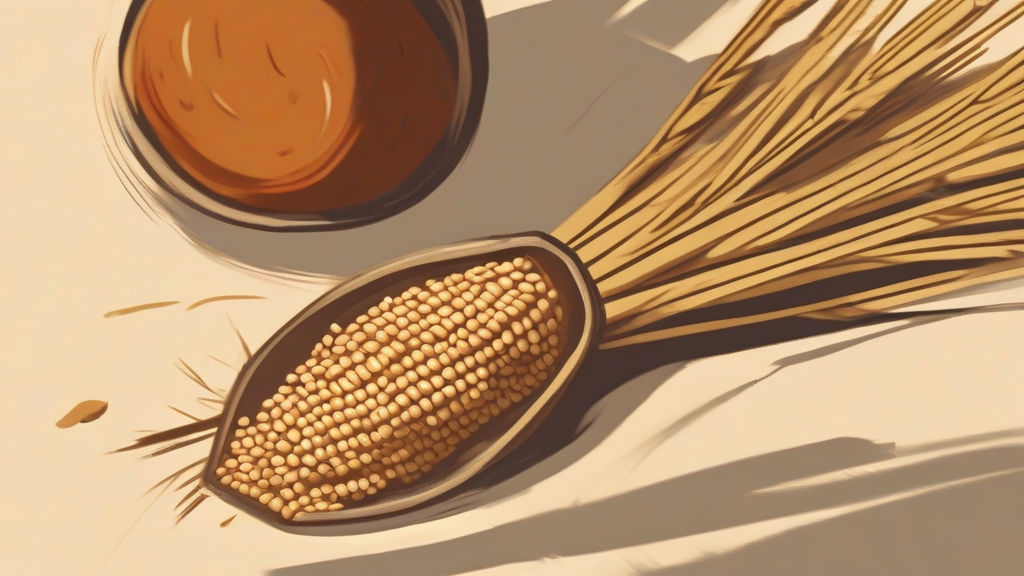
Dhourra is an alternative English spelling of durra, denoting sorghum (Sorghum bicolor), a drought-tolerant cereal grass long cultivated across North Africa, the Middle East, and South Asia. The word entered English through Egyptian Arabic, where it names the staple grain that sustained rural populations for millennia. Dhourra can refer either to the growing plant, valued both for its grain and its stalks used as fodder, or to the small round seeds themselves, which are ground into flour for bread and porridge. The term appears most often in older geographical, agricultural, and ethnographic accounts of Egypt and India, and it carries a slightly archaic, scholarly flavor today. In contemporary usage the spellings 'durra' and the generic word 'sorghum' are far more common, making dhourra chiefly of interest to readers of historical texts about traditional farming in arid lands.
nounA variety of sorghum (Sorghum bicolor) cultivated as a grain and forage crop, especially in Egypt, India, and other warm dry regions; the grain of this plant.
- Sorghum bicolor as a cereal and forage crop grown in North Africa and South Asia.
- The edible grain produced by this plant.
"The farmers along the Nile harvested their dhourra before the rains arrived."
"In years when wheat failed, Egyptian peasants relied on dhourra as their staple grain."
"The merchant's sacks of dhourra were loaded onto camels bound for Cairo's grain market."
Rarely pluralized since it usually functions as a mass noun referring to the crop or grain; a plural form may appear when distinguishing varieties.
"Several dhourras are cultivated across the Nile valley."
The word 'dhourra' traveled straight from the fields of Egypt into English dictionaries, borrowed from Arabic to name the sorghum that fed entire civilizations along the Nile.
Reviewed by Deb Chak, Editor. AI-assisted content curated by RJS Tech Solutions LLP.
Etymology of dhourra
Dhourra derives from Egyptian Arabic ḍuraʿ (ضُرَع), the local name for sorghum, and was adopted into English during the nineteenth century through travelers' and colonial agricultural writings on Egypt and India. It belongs to the same family of borrowings as the more common spelling 'durra', which comes from the same Arabic source. The word reflects how European lexicographers transliterated Arabic sounds differently, producing variant spellings such as dhourra, dhurra, and doura for one and the same crop.
How dhourra is actually used
An agricultural and somewhat dated term found mainly in historical, ethnographic, and colonial-era texts; modern writing on sorghum typically uses 'sorghum' or the spelling 'durra'.
Easily confused with dhourra
Durra is simply the more common anglicized spelling of the same word — both refer to sorghum, with 'dhourra' being a less frequent transliteration.
Doura is another variant spelling of dhourra (sorghum), not a different plant.