What does diamondback mean?
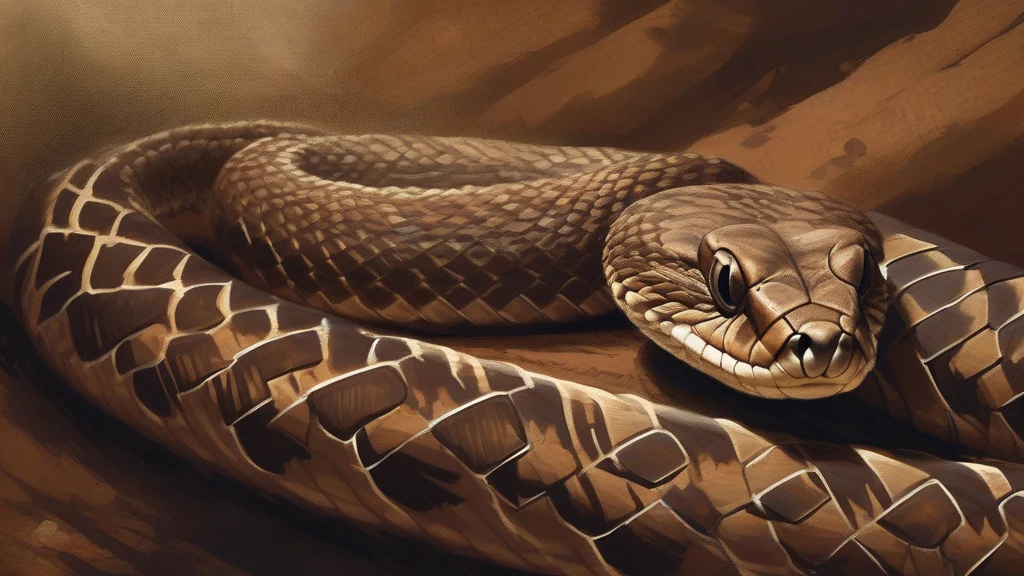
Diamondback is an English noun used chiefly for animals whose backs bear distinctive diamond-shaped markings. Most often it refers to large venomous rattlesnakes native to North America — notably the eastern diamondback of the southeastern United States and the western diamondback of the arid Southwest — which are among the continent's most formidable pit vipers. The name also belongs to the diamondback terrapin, a turtle of Atlantic and Gulf coastal marshes prized historically for food, and to small moths whose folded wings form a pale diamond pattern. In speech and writing, diamondback usually appears as part of the full species name but frequently stands alone once the animal has been introduced. Because several of these creatures are well known for their striking appearance and, in the case of the rattlesnakes, their danger, the word carries vivid associations of the American wilds. It remains a staple of nature writing, wildlife reporting, and regional folklore across much of North America.
nounA diamondback is a large venomous rattlesnake of North America with diamond-shaped markings along its back, especially the eastern or western diamondback. The term also applies to the diamondback terrapin and to certain moths whose wings bear diamond-shaped patterns.
- A large venomous North American rattlesnake (genus Crotalus) with diamond-shaped dorsal markings, especially Crotalus adamanteus (eastern) or Crotalus atrox (western).
- The diamondback terrapin (Malaclemys terrapin), a turtle of brackish coastal waters of the eastern United States, named for the diamond-patterned scutes on its shell.
- Any of various small moths (especially of genus Plutella) whose folded wings show a diamond-shaped pattern.
"Hikers in Arizona are warned to give the western diamondback a wide berth."
"The rancher spotted an enormous western diamondback coiled beneath the water trough."
"Diamondback terrapins were once so heavily harvested for soup that their populations along the Atlantic coast collapsed."
Regular plural; commonly used when referring collectively to the snakes or turtles, e.g. in wildlife reports.
"Western diamondbacks are responsible for more serious bites in the southwestern United States than any other snake."
The eastern diamondback can deliver enough venom in a single bite to be genuinely life-threatening to an adult human — and its 'diamonds' are made of nothing but scales.
Reviewed by Deb Chak, Editor. AI-assisted content curated by RJS Tech Solutions LLP.
Etymology of diamondback
The word is transparently a compound of 'diamond' — from Old French 'diamant', ultimately from Greek 'adamas' meaning unconquerable or hardest substance — and 'back'. It arose as an English descriptive name for creatures bearing diamond-shaped patterns along the spine, first applied in North America to rattlesnakes and terrapins during the colonial period. Related words sharing the Greek root include 'adamant' and 'adamantine'.
How diamondback is actually used
Used almost exclusively as a modifier before the animal's name (e.g., 'a diamondback rattlesnake'), though it commonly stands alone when the context makes clear which creature is meant. The snake sense dominates in everyday American usage; the terrapin sense is familiar mainly in coastal regions and among naturalists.
Easily confused with diamondback
Rattlesnake is the general term for the whole group of venomous snakes with segmented tail rattles, while diamondback names only particular species within that group marked by diamond-shaped patterns.