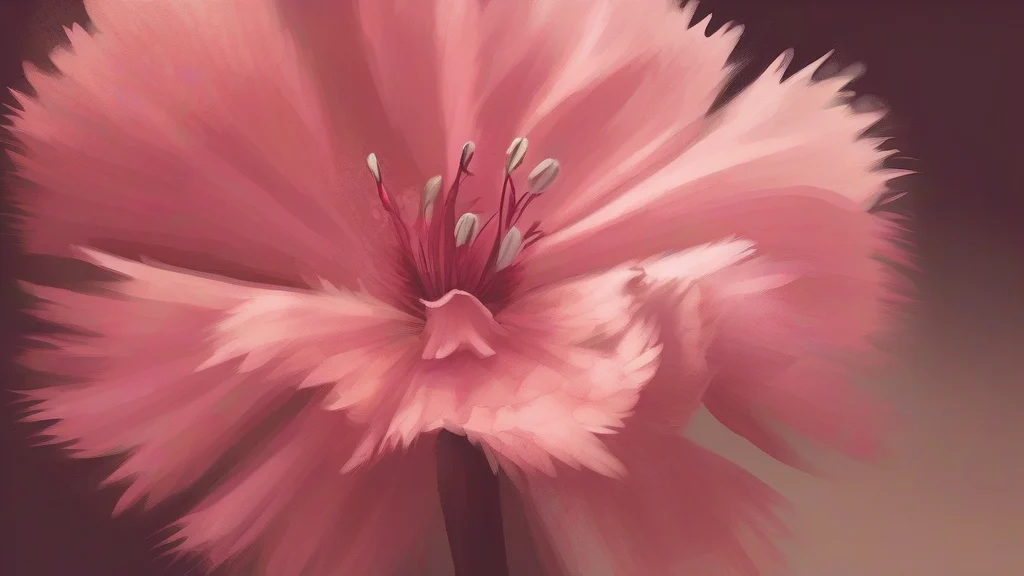
What does dianthus mean?
Dianthus is a noun naming any member of a large genus of flowering plants in the pink family, best known for including the carnation, the garden pink, and sweet william. These plants are typically herbaceous perennials or annuals prized for their intensely fragrant flowers, which often carry a spicy, clove-like scent and display petals with distinctive fringed or serrated edges. The name comes from the Greek words for 'divine' or 'of Zeus' and 'flower', so it literally means 'flower of the gods'. In practice, the word appears mostly in gardening, horticulture, and botany: gardeners might plant a border of scented dianthus, while botanists refer to the genus when classifying its hundreds of species, which are largely native to Europe and Asia. In casual conversation, people tend to name the individual plants instead, making 'dianthus' a somewhat technical but elegant term. Its plural is commonly left unchanged, though 'dianthuses' also occurs. For anyone interested in gardens or etymology, it is a word worth knowing.
nounA plant belonging to the large genus Dianthus of the pink family, which includes carnations, pinks, and sweet william; typically a fragrant herbaceous flower with petals that are often fringed or toothed.
- Any flowering plant of the genus Dianthus, including carnations, pinks, and sweet william, typically bearing fragrant flowers with often fringed or serrated petal edges.
"She planted a border of scented dianthus along the sunny edge of the garden."
"The old-fashioned dianthus filled the cottage garden with its clove-like perfume."
"Botanists have described hundreds of species within the genus Dianthus, many native to Europe and Asia."
The plural is most often left unchanged, especially in gardening and botanical writing; 'dianthuses' is a less common but acceptable variant.
"Several dianthus bloomed along the path well into autumn."
Its name literally means 'flower of the gods' in Greek — fitting for the family that gave us the carnation.
Reviewed by Deb Chak, Editor. AI-assisted content curated by RJS Tech Solutions LLP.
Etymology of dianthus
The word dianthus comes from Latin, where it was adopted from Greek: 'dios' meaning divine or of Zeus, combined with 'anthos' meaning flower, yielding the sense 'flower of the gods'. The Swedish botanist Carl Linnaeus established Dianthus as the formal scientific genus name in the eighteenth century as part of his system of binomial nomenclature. The same Greek root 'anthos' appears in many other flower-related English words, such as anthology, anther, and chrysanthemum, while the 'dios' element is related to names of Zeus seen in words like pantheon.
How dianthus is actually used
Primarily used by gardeners, horticulturists, and botanists; in everyday speech people more often name the specific plants (carnation, pink, sweet william) rather than saying 'dianthus'. The plural is usually 'dianthus' unchanged or occasionally 'dianthuses'; both plural forms are acceptable, with the unchanged form common in gardening contexts.
Easily confused with dianthus
Acanthus is an unrelated ornamental plant (bear's breeches) whose spiky leaves inspired classical architecture; dianthus is the genus of pinks and carnations — the two share a similar Greek-derived ending but nothing else.