What does dickeybird mean?
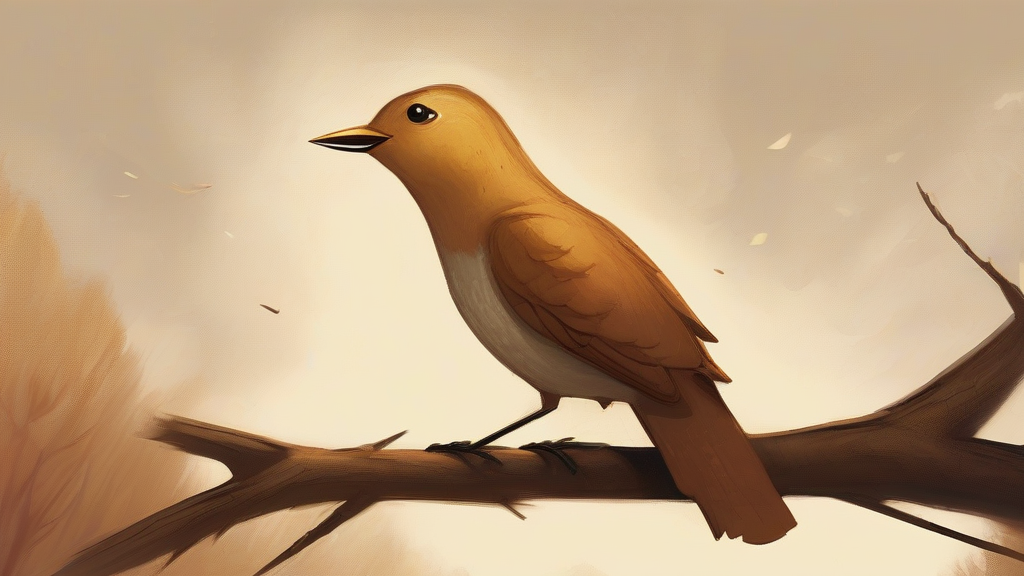
A dickeybird is simply a small bird, referred to in an informal, affectionate, or childlike way. The term belongs to the same cozy register as "birdie" and appears most often in nursery talk, family conversation, and nostalgic or whimsical writing rather than in ornithology, where precise species names are preferred. Its charm lies partly in its history: "dickey" originated as a pet form of the name Richard, later becoming a general diminutive prefix in British English, so a dickeybird is, in effect, a bird given a familiar little nickname. The word can also be used figuratively to describe anything tiny or trifling, as in dismissing a problem as "a mere dickeybird." Because it evokes childhood and domestic warmth, writers reach for it when they want to soften a scene or lend it a gentle, old-fashioned flavor, though using it in technical contexts would strike readers as odd or cutesy.
A small bird, referred to informally or affectionately, especially in speech directed at children.
"Look at the little dickeybird hopping along the fence!"
Chiefly informal and often childish; avoided in scientific or formal writing.
Something regarded as very small, slight, or insignificant.
"To a company of that size, the fine was just a dickeybird."
Figurative extension of the literal sense; usually preceded by an adjective such as 'mere' or 'little'.
Regular plural; both "dickeybirds" and the hyphenated "dicky-birds" are seen, with the solid spelling increasingly common.
"The feeder attracted dozens of hungry dickeybirds after the snowfall."
"Dickeybird" hides a nickname: "dickey" was once a pet form of the name Richard, so calling a tiny bird a dickeybird is affectionately naming it Dick.
Reviewed by Deb Chak, Editor. AI-assisted content curated by RJS Tech Solutions LLP.
Etymology of dickeybird
The word combines "bird" with "dickey," which began as a pet form of the name Richard and developed into a general English diminutive meaning "small" or "affectionately trivial." The compound arose in colloquial British English, likely by the eighteenth or nineteenth century, and spread through nursery speech and informal usage to America. It shares this origin with other "dickey" formations such as "dicky" (a false shirt front) and "dicky-seat" (a small rear seat), all drawing on the same sense of something small or secondary.
How dickeybird is actually used
The word belongs to informal and domestic registers — nursery talk, family conversation, light journalism — and would be out of place in formal scientific writing about birds. It carries a warm, affectionate connotation rather than a dismissive one, though its figurative use can shade into belittling.
Easily confused with dickeybird
A dickcissel is a specific North American songbird related to cardinals, whereas a dickeybird is a generic informal term for any small bird.