
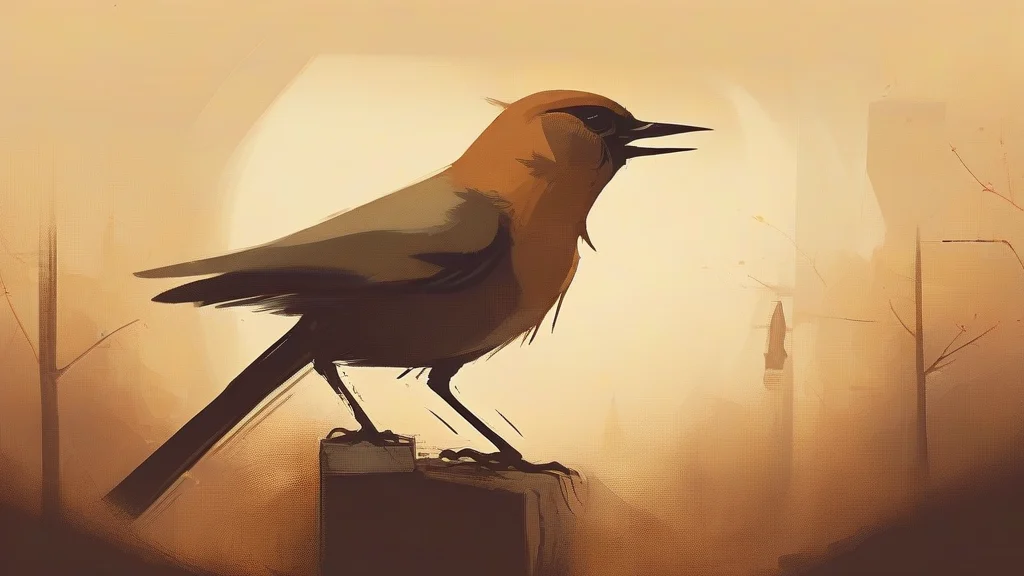
What does dickybird mean?
Dickybird is an informal British English noun for a small bird, carrying a gentle, affectionate, and somewhat old-fashioned tone. It belongs largely to domestic and childhood vocabulary — the kind of word a grandparent might use while pointing out birdsong in the garden — and appears frequently in children's rhymes and stories. Beyond its literal sense, the word survives in a well-known idiom: to say you heard 'not a dicky bird' means you received no message, news, or sound whatsoever, making it a vivid alternative to 'not a peep'. The phrase remains current in colloquial British speech, though it can strike younger ears as quaint. For learners of English, dickybird offers a window into the affectionate diminutive style of British informal vocabulary, where ordinary creatures are given cosy, familiar names. It is rarely used in formal writing, but in the right context it adds warmth and a distinctly British flavour to conversation.
An informal, chiefly British word for a small bird, often used in addressing or talking with children.
"Look, there's a dickybird on the feeder!"
Affectionate and colloquial; rare in formal contexts.
Used in the phrase 'not a dicky bird' to mean not a single word or sound; no communication whatsoever.
"She said she'd write every week, but not a dicky bird arrived all year."
This idiomatic sense is fixed to the negative phrase and is distinctly British.
Regular plural; the idiomatic phrase 'not a dicky bird' always stays singular.
"The hedgerows were alive with dickybirds on that bright spring morning."
'Not a dicky bird' is a charmingly old-fashioned British way of saying you heard nothing at all — not even a peep.
Reviewed by Deb Chak, Editor. AI-assisted content curated by RJS Tech Solutions LLP.
Where does dickybird come from?
Dickybird combines 'bird' with 'dicky', a pet form of the name Dick, itself a familiar diminutive of Richard. From the sixteenth century onward, 'Dick' was used generically for any fellow or chap, and attaching it to small animals became a way of making them seem homely and endearing — hence 'dickybird' as an affectionate term for a little bird. The word has been established in English since at least the eighteenth century and remains especially at home in British nursery speech and traditional rhyme.
How dickybird is actually used
The word is informal and affectionate in tone, common chiefly in British English and often associated with nursery language or older speakers. The idiomatic use in 'not a dicky bird' is distinctly British and colloquial.
Easily confused with dickybird
A 'dicky' (or dickey) is a false shirt front or, in British slang, something shaky or unreliable, whereas 'dickybird' is simply an informal name for a small bird.