What does diesel mean?
Diesel names both a kind of internal-combustion engine and the fuel that powers it. Invented by the German engineer Rudolf Diesel in the 1890s, the diesel engine dispenses with spark plugs: air is compressed until it becomes hot enough to ignite injected fuel on its own. This design makes diesel engines more efficient than comparable petrol engines, which is why they dominate heavy transport—trucks, buses, ships, trains, farm machinery—where torque and fuel economy matter more than speed. As a noun, diesel can refer to the engine itself, to the heavier petroleum fuel oil burned inside it, or informally to any vehicle fitted with one. Because diesel combustion produces nitrogen oxides and particulates alongside its efficiency gains, the word also carries environmental connotations, often surfacing in debates over air quality and emissions standards.
nounA type of heavy internal-combustion engine that ignites fuel by compression rather than by a spark, invented by Rudolf Diesel in the 1890s; also the petroleum-derived fuel oil used in such engines.
- The fuel: a heavier fraction of petroleum oil used as fuel in compression-ignition engines.
- The engine: an internal-combustion engine in which ignition is caused by the heat of compressed air rather than by a spark.
- Informally, a vehicle powered by a diesel engine (e.g., 'a fleet of diesels').
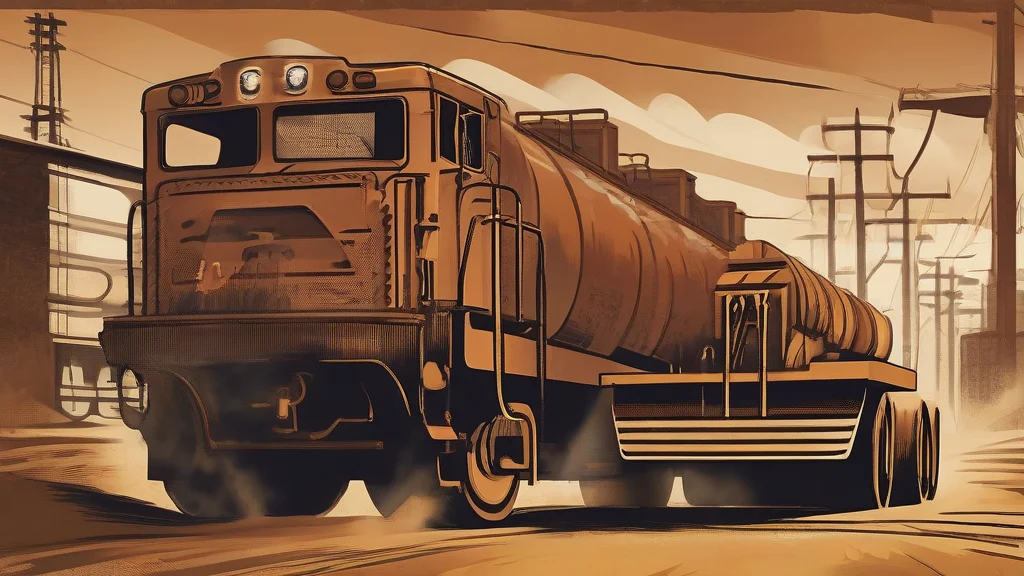
"The old freight train rumbled past on a pair of thundering diesel engines."
"Most long-haul trucks still run on diesel despite the rise of electric alternatives."
"The museum restored a vintage diesel to working order for its centenary exhibition."
Used chiefly for multiple diesel engines or, informally, multiple diesel-powered vehicles; the fuel itself is uncountable.
"The railway retired its last steam locomotives and now runs entirely on diesels."
The word 'diesel' isn't just about engines—it's literally the surname of Rudolf Diesel, the German engineer who vanished at sea in 1913 before his invention reshaped the world.
Reviewed by Deb Chak, Editor. AI-assisted content curated by RJS Tech Solutions LLP.
Etymology of diesel
'Diesel' is a straightforward eponym: it derives from Rudolf Diesel (1858–1913), the Bavarian-born engineer who patented his compression-ignition engine in the 1890s. His surname was applied first to the engine he designed and then, naturally, to the fuel it consumed. Because the word comes from a proper name rather than an older root, it has no true cognates in other languages, though the term itself has been borrowed broadly into languages worldwide alongside the technology.
Related word forms
How diesel is actually used
Register-neutral and widely understood across British and American English; when used informally for vehicles ('a diesel'), it functions as shorthand for 'diesel vehicle' and is common in both speech and trade writing.
Easily confused with diesel
Gasoline is a lighter fuel that requires a spark plug for ignition, whereas diesel is a heavier oil ignited by compression heat in diesel engines.