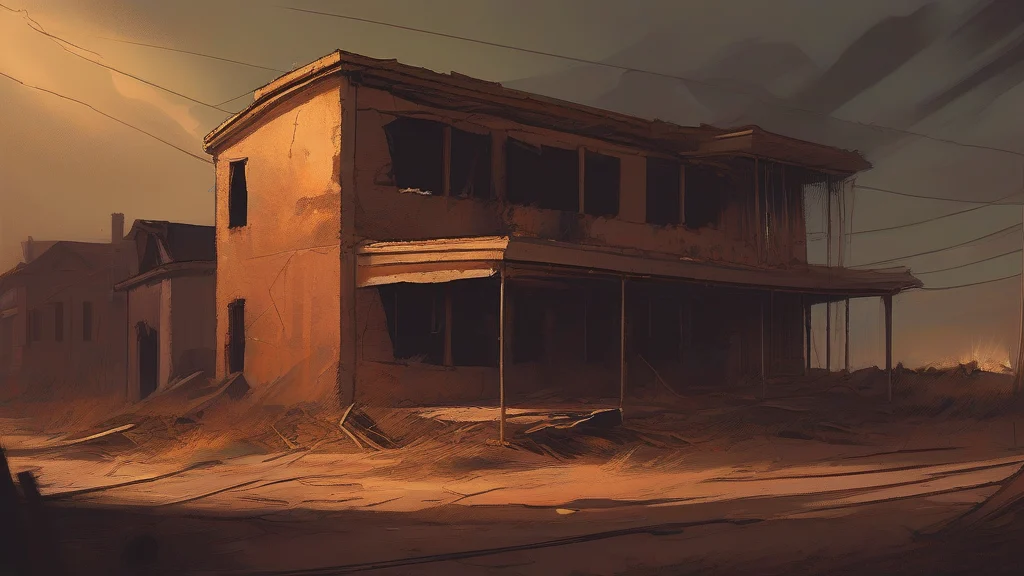
What does dilapidate mean?
To dilapidate is to allow something—most often a building—to sink gradually into ruin and disrepair, usually through sustained neglect rather than sudden destruction. A neglected barn dilapidates over the years; so, in older and legal usage, does an inheritance squandered by a careless heir. The word comes from the Latin dilapidare, literally 'to scatter like stones', which gives it a vivid etymological image: a dilapidated structure is one whose very fabric has been dispersed piece by piece. Today the verb itself sounds formal and slightly literary, while its participle 'dilapidated' is common and vividly descriptive of peeling paint, sagging roofs, and crumbling walls. Its antonyms—restore, renovate, preserve—highlight its essential meaning: deterioration that could have been prevented by care. Writers reach for it when they want a precise, evocative way to describe slow, neglectful ruin.
verbTo cause (a building or structure) to fall into a state of disrepair through neglect; more broadly, to waste or squander something.
- To fall into ruin or disrepair, especially through neglect.
- To squander or waste money, property, or an inheritance.
"Years of absentee ownership allowed the grand old hotel to dilapidate into a shell of its former self."
"Neglected for decades, the mansion had dilapidated until only its stone facade remained standing."
"The heir was accused of dilapidating the family fortune through reckless speculation."
'Dilapidate' literally means 'to scatter stones' — from Latin lapis, 'stone' — so a dilapidated building is, etymologically, one whose very stones have been thrown away.
Reviewed by Deb Chak, Editor. AI-assisted content curated by RJS Tech Solutions LLP.
Etymology of dilapidate
Dilapidate derives from the Latin dilapidare, formed from dis- ('apart') plus lapis ('stone'), originally meaning to scatter stones or demolish a building stone by stone. It entered English in the early modern period, carrying both a literal sense of physical ruin and a figurative legal sense of wasting an estate. It shares the root lapis with words such as lapidary, relating to precious stones.
Related word forms
How dilapidate is actually used
Formal and somewhat literary in register; in everyday speech the adjective 'dilapidated' is far more common than the verb itself, which often appears in passive constructions ('the building had been allowed to dilapidate'). The sense of squandering an estate is chiefly legal and historical.
Easily confused with dilapidate
To deprecate is to express disapproval of something, whereas to dilapidate is to let a building fall into disrepair or to waste resources.