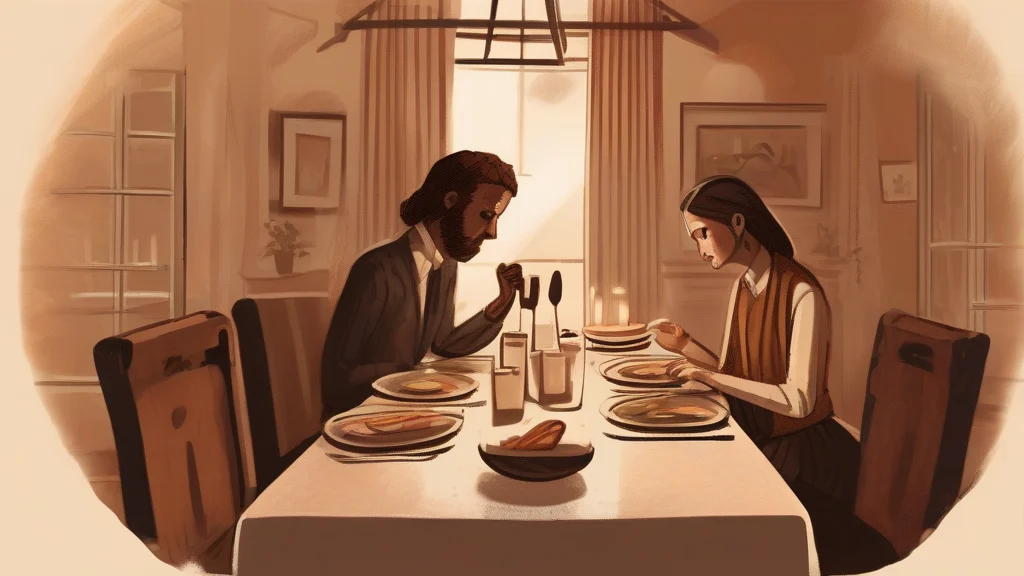
What does dined mean?
Dined is the past tense and past participle of the verb dine, which means to eat one's main meal of the day — usually dinner in the evening — or to host someone at such a meal. The word carries a more formal, elevated tone than simple verbs like eat: one might say guests dined on roasted lamb and fine wine, suggesting a considered, pleasurable occasion rather than a quick bite. Common patterns include dined on (specifying the food), dined out (eating away from home), and wined and dined (being entertained generously, sometimes with a hint that hospitality is being offered for persuasive purposes). The verb traces back through Middle English to Old French disner, originally meaning to break a fast, which is why it shares ancestry with the word dinner. Whether describing candlelit restaurants, diplomatic banquets, or a quiet evening at home, dined signals that the meal mattered.
verb (past tense and past participle of "dine")Dined is the past tense and past participle of the verb "dine," meaning to eat the principal meal of the day, especially in the evening, or to give a formal dinner for someone.
- To have eaten a formal or main meal, typically in the evening.
- To have given a formal dinner or entertained someone at a meal.
- (With "on") To have eaten a particular food as part of a meal.
"They dined at an elegant French restaurant overlooking the harbor."
"The ambassador was dined and toasted by dignitaries throughout the week."
"After the concert, they dined on fresh pasta and a bottle of Chianti."
The word "dine" once simply meant "to break your fast" — its Old French ancestor disner literally means to un-fast.
Reviewed by Deb Chak, Editor. AI-assisted content curated by RJS Tech Solutions LLP.
Etymology of dined
Dined comes from the verb dine, which entered English from Old French disner, meaning to eat the first substantial meal of the day — literally "to dis- (un-) jeûner (fast)." The sense shifted over centuries from the day's first meal to the main or evening meal as European eating habits changed. Cognates include modern French dîner, Spanish desayunar, and Italian desinare, all descended from the same Latin roots dis- plus jejunare (to fast), giving English not only dine and dined but also dinner and diner.
Related word forms
How dined is actually used
"Dine" carries a somewhat formal or refined register compared to plain "eat." It often implies leisurely, quality dining rather than casual consumption. The phrase "wined and dined" is idiomatic and can be used literally or figuratively to mean entertaining lavishly.
Easily confused with dined
"Denied" means refused or declared untrue, while "dined" means ate a meal — they look similar but share no meaning.