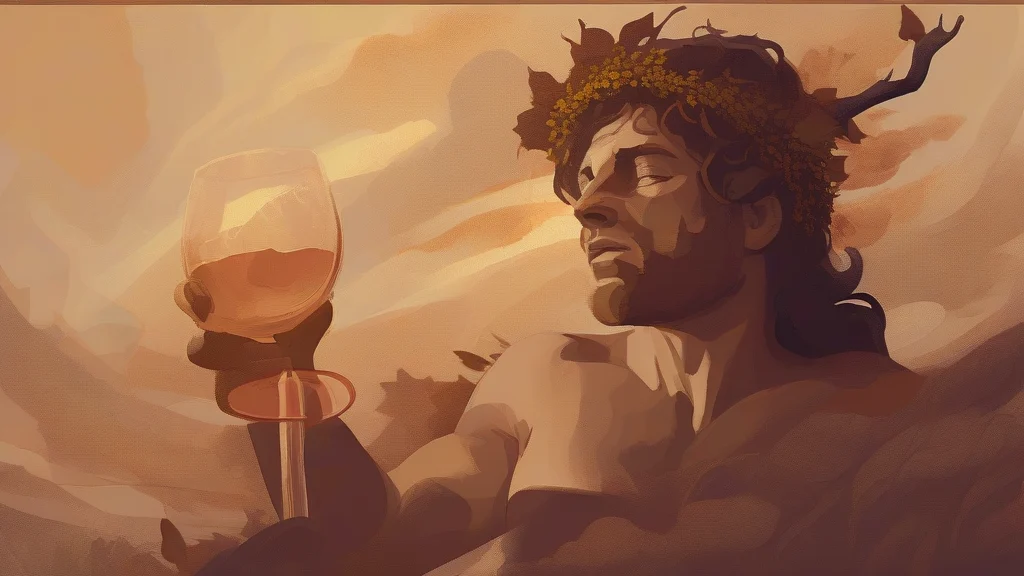
What does dionysian mean?
Dionysian is an adjective describing anything connected to Dionysus, the ancient Greek god of wine, fertility, ritual madness, and theatrical ecstasy. In everyday figurative use, it characterizes moods, gatherings, or art marked by unrestrained passion, sensual pleasure, and joyous abandon — a night of Dionysian revelry is one of music, drink, and letting go of inhibition. The word gained lasting intellectual weight through Friedrich Nietzsche's 'The Birth of Tragedy' (1872), where he set the Dionysian principle of chaos and intoxication against the Apollonian principle of order, clarity, and rational form, arguing that great drama unites both. Because of this heritage, Dionysian often appears in criticism of literature, music, and film to describe works that overwhelm reason with feeling. It is a literary word, typically formal in register, and is frequently capitalized when invoking the god himself.
adjectiveRelating to Dionysus, the ancient Greek god of wine, fertility, and ecstatic celebration; by extension, characterized by wild, unrestrained emotion, sensual pleasure, or frenzied abandon.
- Of or relating to Dionysus, the Greek god of wine and festivity.
- Characterized by uninhibited emotion, sensual indulgence, or ecstatic frenzy (often contrasted with the Apollonian).
"The festival dissolved into a night of Dionysian revelry, with music and dancing spilling into the streets."
"The carnival's Dionysian energy swept up everyone in its path."
"Nietzsche saw tragedy as born from a fusion of the Dionysian and the Apollonian."
Nietzsche argued that all great art is a battle between two Greek gods — and the wild, drunken one usually wins.
Reviewed by Deb Chak, Editor. AI-assisted content curated by RJS Tech Solutions LLP.
Etymology of dionysian
Dionysian derives from the name Dionysus (Greek Dionysos), the god of wine and ecstasy, via the Latinized adjective Dionysius and the adjectival suffix -an. English adopted it in the seventeenth century, originally in learned references to Greek religion and the Dionysia, the Athenian festivals honoring the god. Its modern philosophical currency stems from Nietzsche's use of it as a term of art in aesthetics.
How dionysian is actually used
Literary and somewhat formal in register; often capitalized when referring directly to the god or Nietzsche's dichotomy, lowercase in general figurative use.
Easily confused with dionysian
In Nietzsche's aesthetic theory, the Dionysian represents chaos, intoxication, and emotional abandon, while the Apollonian represents order, reason, and form.