
What does dipteron mean?
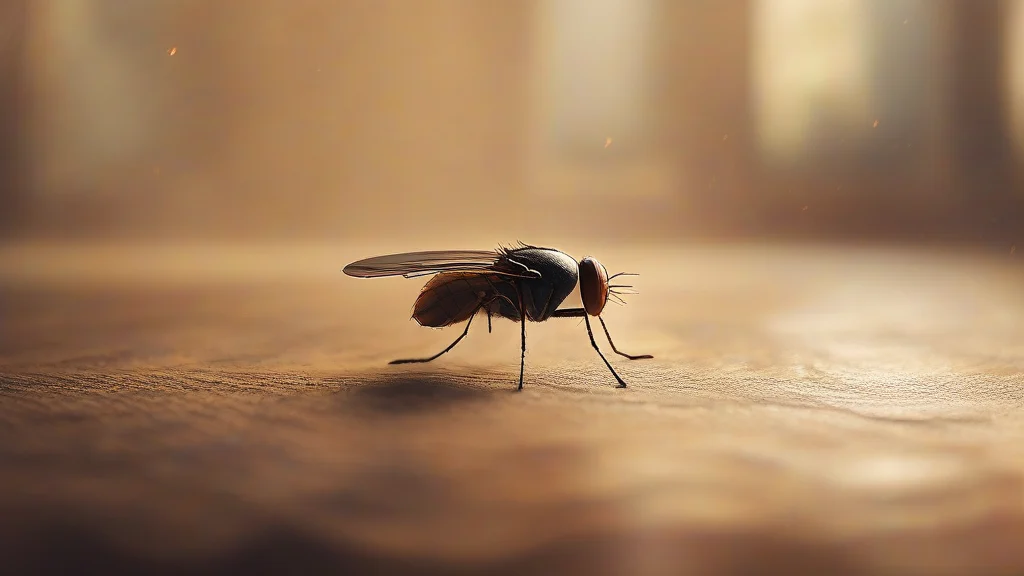
A dipteron is any member of the insect order Diptera — the group commonly known as true flies, which includes familiar insects such as houseflies, mosquitoes, gnats, and hoverflies. The name derives from the Greek for 'two-winged', reflecting the group's defining trait: unlike nearly all other flying insects, adult dipterons possess just one pair of functional wings, the hind pair having evolved into small club-like balancing organs called halteres. The word appears almost exclusively in formal and scientific contexts; everyday speech prefers simply 'fly' or the related term 'dipteran'. Entomologists value the order for its extraordinary diversity, as Diptera ranks among the largest of all insect orders, with well over 150,000 described species occupying roles from pollinator to pest to disease vector. Knowing the word signals familiarity with technical zoological vocabulary.
nounA dipteron is an insect of the order Diptera — a two-winged fly such as a housefly, mosquito, gnat, or midge. The term is chiefly used in entomology as a singular noun corresponding to the more common 'dipteran'.
- A member of the insect order Diptera; a true fly having one pair of functional wings.
"The pond's edge swarmed with every kind of dipteron, from tiny midges to fat hoverflies."
"The entomologist identified the specimen as a common dipteron of the family Muscidae."
"At dusk, each hovering dipteron became a snack for the swooping swifts."
Follows the Latin/Greek-style pluralization used in scientific naming; the anglicized 'dipterons' also occurs but is less standard.
"The collection contained hundreds of diptera, ranging from crane flies to biting midges."
Every fly you've ever swatted — from mosquito to housefly — belongs to a single insect order whose name literally means 'two wings', because they've traded their hind pair for tiny balancing organs called halteres.
Reviewed by Deb Chak, Editor. AI-assisted content curated by RJS Tech Solutions LLP.
Etymology of dipteron
Dipteron comes from the New Latin 'Diptera' (the order name), itself borrowed from the Greek 'dipteros', meaning 'two-winged' — a compound of 'di-' ('twice') and 'pteron' ('wing'). English adopted it in the nineteenth century alongside the rise of systematic entomology. It shares this Greek root with words like 'helicopter' (literally 'spiral wing') and 'lepidopteran' (butterflies and moths, the 'scaly-winged' insects).
Related word forms
How dipteron is actually used
Formal and technical in register; found mainly in entomological and academic writing. In general usage, 'fly' or the anglicized 'dipteran' is far more common; 'dipteron' preserves the Greek-style singular/plural pattern (dipteron/diptera).
Easily confused with dipteron
Despite the similar 'dip-' opening, a diplomat is an official representing their country abroad, while a dipteron is a two-winged insect.