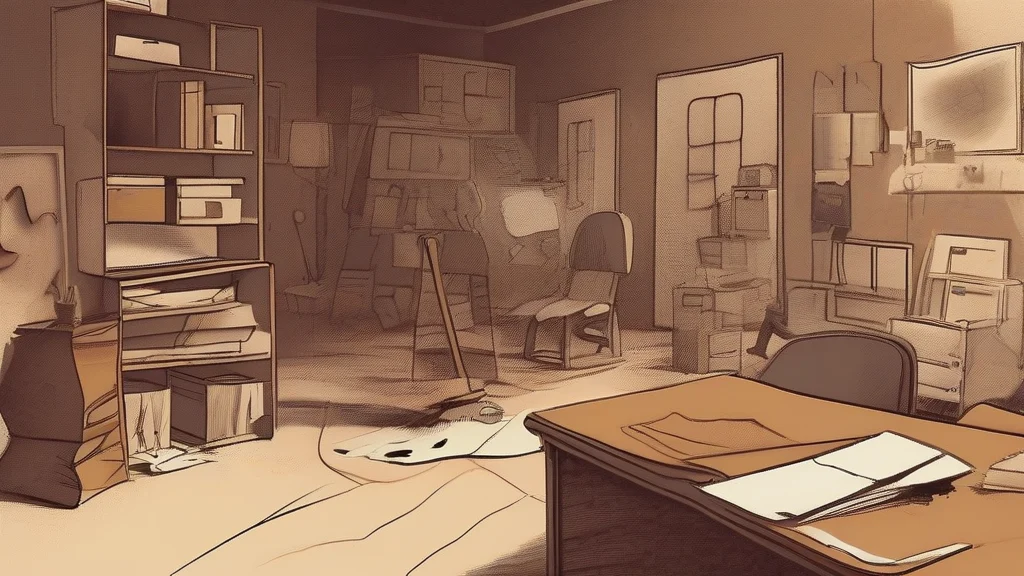
What does disarranged mean?
"Disarranged" is the past tense and past participle of the verb "disarrange," meaning to disturb the order or arrangement of something. It also functions as an adjective describing things that have been thrown out of their neat or intended order — a disarranged pile of letters, disarranged furniture, or a strand of disarranged hair. The word carries a gentler connotation than stronger terms like "shambles" or "chaos": it suggests a disturbance of tidiness rather than outright ruin, and implies that order can readily be restored. Its register leans slightly formal or literary, making it a favorite of novelists describing rumpled appearances or disturbed rooms. Etymologically it combines the prefix "dis-" (expressing reversal or negation) with "arrange," which itself descends from Old French "arengier," ultimately related to "rang" (row, rank). Closely related forms include the noun "disarrangement" and the adjective use of the participle itself. The word is useful precisely because of this moderation: it names small, reversible disorder with precision and grace.
Past tense and past participle of 'disarrange': disturbed the order or neat arrangement of something.
"The children's arrival disarranged every carefully placed cushion in the parlor."
Almost always used transitively; the thing disarranged must be stated or clearly implied.
In a state of disorder; not neatly or properly arranged.
"He answered the door with disarranged clothes and an apologetic smile."
Frequently applied to hair, clothing, papers, and rooms; slightly formal in tone compared with 'messed up'.
The same Old French root that gives us 'rank' — as in military rank — also hides inside 'disarranged': to break rank is, quite literally, to be disarranged.
Reviewed by Deb Chak, Editor. AI-assisted content curated by RJS Tech Solutions LLP.
Etymology of disarranged
"Disarranged" derives from the verb "disarrange," formed in English from the prefix "dis-" plus "arrange." "Arrange" came into English from the Old French "arengier" ("to place in a row"), from "rang" meaning row or rank — the same Germanic-rooted French word that gave English "rank." The formation parallels other Romance borrowings of the early modern period, when "dis-" was freely attached to Latinate verbs to express undoing. Cognates sharing this lineage include "range," "rank," and "rearrange."
Related word forms
How disarranged is actually used
Somewhat more formal or literary than everyday alternatives like 'messed up'; common in descriptive writing about appearance (hair, clothing), rooms, papers, and other physically ordered things. It carries a mild, often temporary connotation — things that are disarranged can usually be tidied again.
Easily confused with disarranged
'Deranged' means mentally unbalanced or insane (or, literally, thrown out of order), while 'disarranged' refers only to physical orderliness being disturbed, never to mental state.
'Disheveled' applies specifically to untidy hair or clothing and a generally unkempt appearance, whereas 'disarranged' can apply to any object or set of things whose order has been upset.