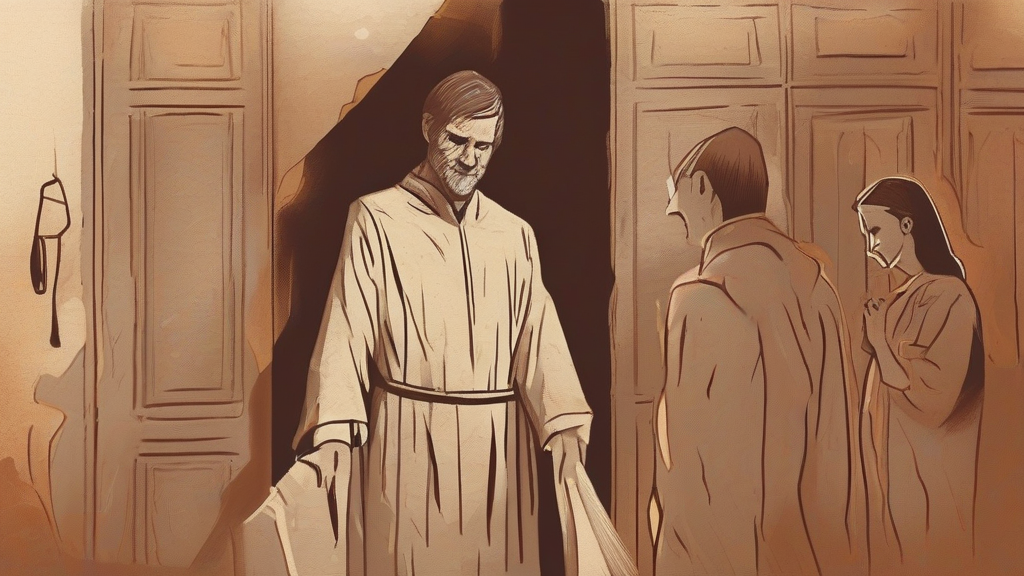
What does disfrocked mean?
Disfrocked is the past tense and past participle of the verb "disfrock," meaning to formally expel a clergyman from holy orders and strip him of the right to minister, celebrate sacraments, or wear clerical garb. The term draws on the vivid image of removing a priest's frock — his distinctive robe — and is applied almost exclusively within religious institutions, usually as the culmination of an ecclesiastical trial involving misconduct, abuse, or doctrinal deviation. In modern usage it appears chiefly in journalism and official church announcements, where phrases such as "a disfrocked priest" are common. A closely related and more frequently encountered spelling is "defrocked," which carries precisely the same meaning. Because the word is tied to ordination, it has no application outside the clergy: lawyers are disbarred and doctors struck off, but only ministers, priests, and monks are disfrocked. Its connotations are grave and formal, signalling not mere dismissal but a public and permanent severing of religious vocation.
verb (past tense and past participle)Past tense and past participle of "disfrock" (also spelled "defrock"): to formally strip a member of the clergy of their priestly or ministerial status, typically as punishment for misconduct or heresy.
- (of a church authority) having formally removed someone from the clergy, revoking their right to perform priestly duties
"The bishop disfrocked the priest after the investigation confirmed decades of abuse."
"After the scandal broke, the Vatican disfrocked the once-celebrated cardinal."
"He lived out his days as a disfrocked minister, preaching informally to anyone who would listen."
The word literally evokes stripping a priest of his frock — the clerical garment — making it one of the most vivid metaphors for professional disgrace in English.
Reviewed by Deb Chak, Editor. AI-assisted content curated by RJS Tech Solutions LLP.
Etymology of disfrocked
The word derives from "disfrock," formed in English by adding the negative prefix "dis-" to "frock," the long-established English word for a monk's or cleric's habit or gown. "Frock" itself entered Middle English from Old French "froc," likely of Germanic origin. The parallel form "defrock" (with the Latinate prefix "de-") arose alongside it, and both verbs have been used since at least the 19th century to describe formal ecclesiastical degradation. Cognate formations include "unfrock," an older synonym now largely obsolete.
Related word forms
How disfrocked is actually used
Formal register, used almost exclusively in religious and journalistic contexts. The spelling "defrocked" is considerably more common in both British and American English. The verb applies only to clergy — secular professionals are instead "disbarred," "struck off," or "dismissed."
Easily confused with disfrocked
"Defrocked" is simply a more common spelling variant with exactly the same meaning as "disfrocked" — there is no difference in sense.