
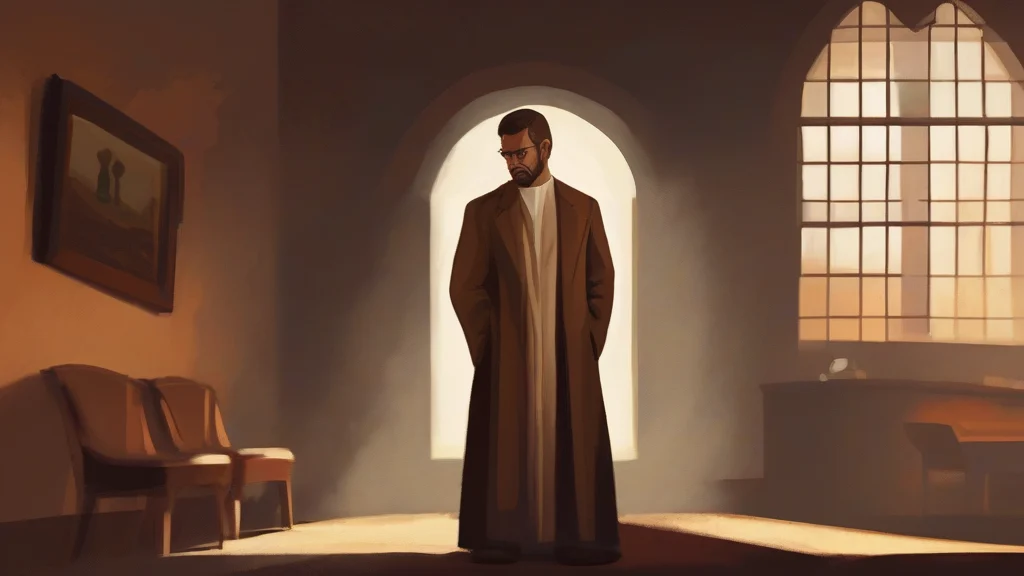
What does unfrocked mean?
Unfrocked means having taken off an ecclesiastical robe or habit, especially the formal garment worn by a priest, monk, bishop, or other clergyman. In literal use, it identifies someone who has exchanged clerical dress for ordinary or secular clothing. Figuratively, the word can describe a cleric who no longer displays the outward trappings or authority of office. The expression belongs chiefly to literary, historical, and political contexts rather than everyday modern English, where “out of habit” or “in secular dress” would usually be more natural. Its unusual history reflects an older metaphorical treatment of clothing as part of identity: to be “frocked” was to be invested in the habit of a cleric, and to be “unfrocked” was to remove that visible sign of office. Unfrocked is therefore useful not only as a precise description of dress but also as a vivid term for the separation between institutional role and public appearance.
adjectiveHaving removed an ecclesiastical robe or habit, especially that of a priest or clergyman; hence, figuratively, no longer wearing the outward signs of clerical office.
- Having removed clerical robes or a habit and therefore appearing in secular dress.
- Figuratively, no longer displaying the outward signs or authority of clerical office.
"By dusk the bishop was unfrocked, exchanging his ceremonial vestments for a plain travelling coat."
"The clergyman remained unfrocked at the reception, wearing an ordinary suit rather than his clerical habit."
"The novel describes the unfrocked bishop as a private figure rather than an imposing member of the Church."
In “unfrocked,” the prefix un- means “reverse the act of,” not “not”: the act in question is putting on a frock.
Reviewed by Deb Chak, Editor. AI-assisted content curated by RJS Tech Solutions LLP.
Where does unfrocked come from?
The base is the English noun frock, meaning a garment and especially a monk's or clergyman's habit, borrowed through Old French froc from Medieval Latin frocus. The English verb frock meant to clothe someone in a frock or habit; unfrock was formed with the reversive prefix un-, and unfrocked is its past tense and past participle. The related French défroquer, meaning to take off clerical dress, preserves the same French base.
Related word forms
How unfrocked is actually used
The word is literary, historical, and relatively uncommon in contemporary usage. Its literal sense concerns clerical dress, while figurative uses can suggest withdrawal from clerical identity or public authority.
Easily confused with unfrocked
Unfrocked describes someone who has removed clerical robes, whereas unfrosted describes something that has been thawed or is free from frost.