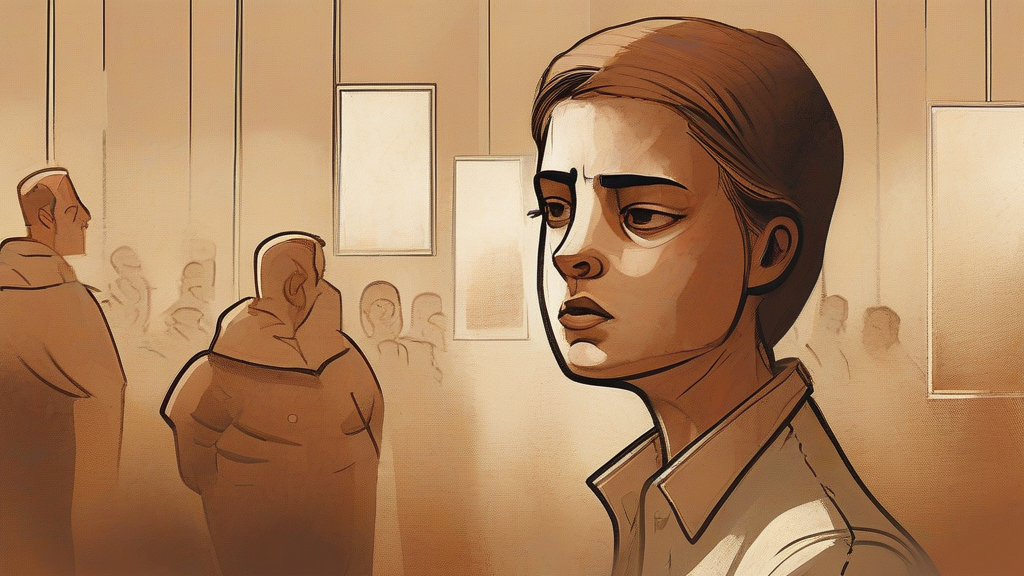
What does displeasure mean?
Displeasure is a noun denoting a feeling of annoyance, dissatisfaction, or mild disapproval — essentially the opposite of pleasure. It occupies a formal middle ground between indifference and outright anger: to feel displeasure is to be put out, and to show it is to make that feeling known, often through a cold word, a frown, or a formal complaint. Because it implies restraint, the word appears frequently in diplomatic, professional, and journalistic contexts — governments express displeasure over policies, employers voice displeasure at poor performance, and guests may display displeasure at poor service. Established phrases include 'express displeasure,' 'show displeasure,' and 'much to someone's displeasure.' Derived from the same Latin root as pleasure, pleasant, and placate, it entered English in the late Middle Ages and remains a useful, precise term for describing polite but unmistakable discontent.
nounA feeling of annoyance, dissatisfaction, or disapproval. It can also refer to the expression of such a feeling, as when someone shows or voices their displeasure.
- A feeling of annoyance, dissatisfaction, or disapproval.
- The outward expression of that feeling (e.g., showing or voicing displeasure).
"She made no attempt to hide her displeasure at being kept waiting."
"The manager expressed her displeasure with the team's missed deadlines."
"Much to his displeasure, the flight was delayed yet again."
Rarely pluralized; displeasure is almost always used as an uncountable noun referring to a general state or feeling.
"The letter catalogued her many displeasures with the service."
Displeasure literally means 'no pleasure' — it's the direct negation of its rhyming cousin 'pleasure', both born of the same Latin root placere, 'to please'.
Reviewed by Deb Chak, Editor. AI-assisted content curated by RJS Tech Solutions LLP.
Etymology of displeasure
Displeasure comes from the prefix dis- ('not') combined with pleasure, which traces back through Old French plaisir to Latin placēre, meaning 'to please' or 'to be agreeable.' The word entered English in the late medieval period, likely via French déplaisance or modeled directly on the pleasure/dis- pattern. It shares this Latin root with words like pleasant, complacent, and placate, all of which descend from placere and its related forms.
How displeasure is actually used
Displeasure is somewhat formal in register, common in professional, diplomatic, and written contexts rather than casual speech. It carries a tone of dignified or restrained annoyance rather than anger — one expresses displeasure, often politely, rather than throwing a tantrum. The phrase 'much to someone's displeasure' is an established idiom indicating something happened against that person's wishes.
Easily confused with displeasure
Displacement refers to being moved from a position or the act of substituting one thing for another, whereas displeasure is simply a feeling of dissatisfaction or annoyance.