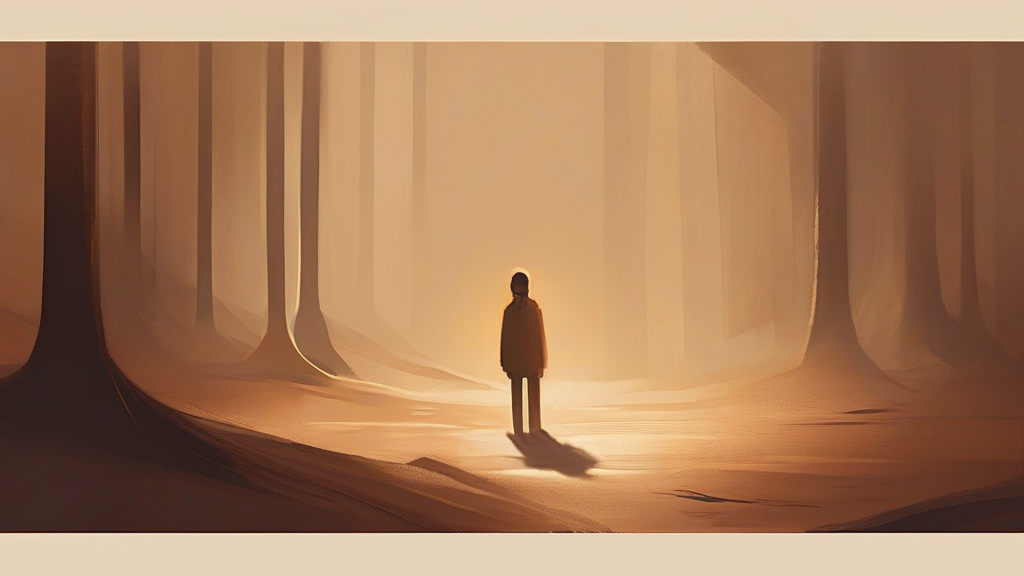
What does disquietness mean?
Disquietness is a formal, somewhat literary noun denoting a state of mental unease, restlessness, or subdued anxiety. It names not a sharp fear but a persistent lack of inner calm — the vague sense that something is wrong, often before any specific cause has been identified. A person may feel disquietness about the future, or disquietness may settle over a community in uncertain times. The word derives from "disquiet," formed from the prefix "dis-" (expressing reversal or absence) and "quiet," which ultimately traces back to the Latin "quies," meaning rest. Because it is less frequently used than near-synonyms such as "unease," "unrest," or "anxiety," it lends writing a deliberate, elevated tone. Writers reach for it when they want to emphasize a brooding, unsettled atmosphere rather than momentary nervousness, making it a precise and evocative choice for describing both individual mood and collective tension.
nounA state of mental unease, restlessness, or anxiety; the quality or condition of being disquieted.
- A state or feeling of mental unease, anxiety, or lack of calm.
"A sense of disquietness settled over the village as news of the storm spread."
"The sudden silence in the market filled her with an inexplicable disquietness."
"Reports of the approaching army spread disquietness throughout the capital."
Rarely pluralized; the word is almost always used as an uncountable mass noun referring to a general state of unease.
"The diary records the many disquietnesses that shadowed his later years."
Built from Latin 'quies' — rest — 'disquietness' literally names the absence of rest, and it shares its ancient root with 'requiem,' the mass for the dead at rest.
Reviewed by Deb Chak, Editor. AI-assisted content curated by RJS Tech Solutions LLP.
Etymology of disquietness
"Disquietness" is formed within English by adding the noun-forming suffix "-ness" to "disquiet," which combines the prefix "dis-" with "quiet." The ultimate root is the Latin "quies" (genitive "quietis"), meaning rest or repose, which also gave English such words as "quiescent," "quietude," "acquiesce," and "requiem." The compound has existed in English since at least the early modern period, though it remains far rarer than its parent noun "disquiet."
Related word forms
How disquietness is actually used
"Disquietness" is relatively rare and formal compared with the more common noun "disquiet" or "unease." It carries a literary, somewhat elevated register and typically describes lingering rather than acute anxiety. It appears more often in British than American writing, though it is understood in both varieties.
Easily confused with disquietness
"Disquiet" functions as a noun, verb, and adjective, while "disquietness" is used only as a noun naming the state of unease itself.