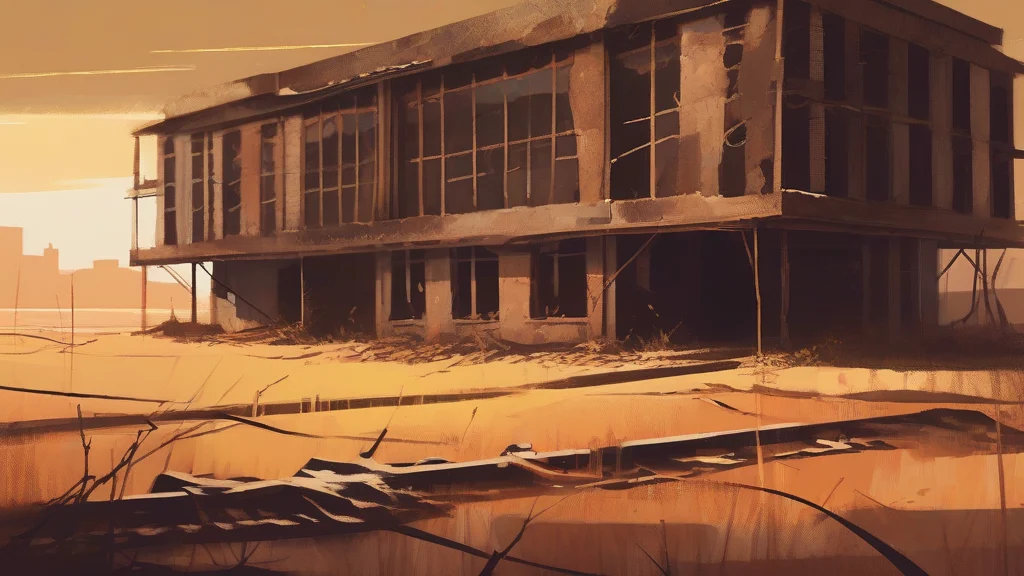
What does disused mean?
'Disused' is an adjective meaning no longer in use — typically applied to buildings, structures, routes, or facilities that once served a purpose but have since been abandoned or left idle. A disused railway line, for example, was once part of an operating network but now carries no trains. The word implies a history of use rather than complete novelty, which sets it apart from 'unused', which suggests something has never been employed at all. Commonly heard in phrases such as 'disused station', 'disused quarry', or 'disused mine', the term carries a neutral, slightly formal tone and is especially frequent in British English, where it often describes industrial heritage sites awaiting restoration or conversion. Its noun counterpart, 'disuse', refers to the state of falling out of use — as when a skill fades 'through disuse'. For writers, 'disused' offers a precise way to signal both past function and present neglect in a single word.
adjectiveNo longer in use; fallen out of use over time.
- (of a place, building, structure, or route) no longer in use; abandoned after previous use
- (of an object or practice) fallen out of use through neglect or obsolescence
"The workers followed a disused track through the hills to the old quarry."
"The lighthouse stood on the headland, long disused and streaked with salt."
"He converted the disused barn into a bright, airy studio."
Britain's network of disused railway lines has found a second life as thousands of miles of walking and cycling paths — abandonment turned into public treasure.
Reviewed by Deb Chak, Editor. AI-assisted content curated by RJS Tech Solutions LLP.
Etymology of disused
'Disused' derives from the noun 'disuse', formed in English by adding the prefix 'dis-' (expressing reversal or negation) to 'use'. 'Use' itself comes from the Old French 'user', ultimately rooted in the Latin verb 'uti', meaning 'to employ or make use of', whose past participle 'usus' gave rise to related words such as 'usage' and 'utility'. The adjective emerged as the participial form of the verb 'to disuse', which appeared in English around the 16th century. Cognates of its root appear across European languages, including French 'usage' and words built on Latin 'uti' such as 'utile' and 'utensil'.
Related word forms
How disused is actually used
'Disused' is most common in British English and appears chiefly before nouns, especially describing buildings, railways, mines, and quarries. It carries a neutral, slightly formal register and implies prior use — it would be odd to call a brand-new object 'disused'.
Easily confused with disused
'Unused' means never having been used at all, while 'disused' means something that was once in use but has since been abandoned.