What does divaricated mean?
Divaricated means divided or spread apart into branches; it is the past form of the verb 'divaricate' and can also serve as an adjective describing something that forks widely. The word appears most often in botany and natural history, where it describes stems, twigs, or horns that branch at a wide angle rather than growing nearly parallel, giving plants a distinctive open, antler-like silhouette. Beyond botany it can be applied figuratively to rivers, paths, or other things that split into diverging courses. Because of its formal register and Latin pedigree, 'divaricated' carries a precise, scholarly tone; writers reaching for everyday language would usually choose 'forked' or 'branched'. Its value lies in that precision: it names not just any branching but a wide-angled, conspicuous forking, making it useful wherever exactness of description matters.
Past tense and past participle of 'divaricate': to split or spread apart into branches; to fork.
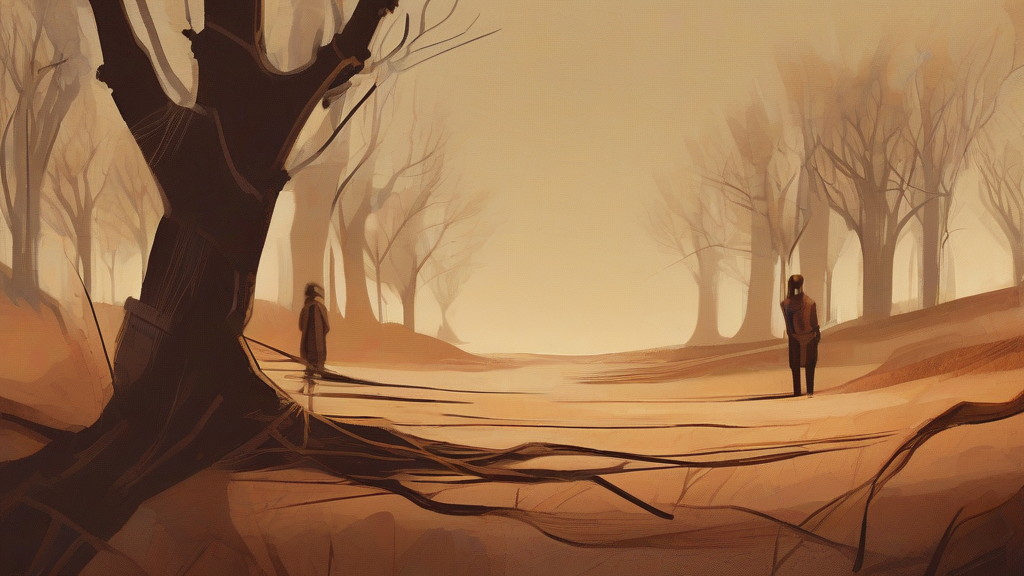
"The ancient oak divaricated just above eye level, sending massive limbs in opposite directions."
Almost always used in technical or descriptive scientific contexts.
Branching widely or forking apart, especially at a broad angle.
"The species is easily recognized by its divaricated growth habit."
Chiefly used in botanical descriptions.
Botanists reach for 'divaricated' when a plant's branches splay so widely that they look like an upside-down antler — it's the technical term for nature's most dramatic forking.
Reviewed by Deb Chak, Editor. AI-assisted content curated by RJS Tech Solutions LLP.
Etymology of divaricated
Divaricated derives from the Latin verb 'divaricare', meaning to spread apart or straddle, formed from the intensive prefix 'di-' plus 'varicus', meaning straddling or spread-eagled, which relates to 'varus', bent or bent outward. The word entered English in the seventeenth century, initially in learned and scientific prose. It shares its Latin root with 'varicose', whose veins are likewise described as abnormally swollen and twisted.
Related word forms
How divaricated is actually used
A formal, largely technical word found most often in botany and descriptive natural history writing. In general prose, simpler alternatives such as 'forked' or 'branched' are more common.
Easily confused with divaricated
'Diversified' means made varied or diverse in character or range, while 'divaricated' means physically branched or forked apart into diverging parts.