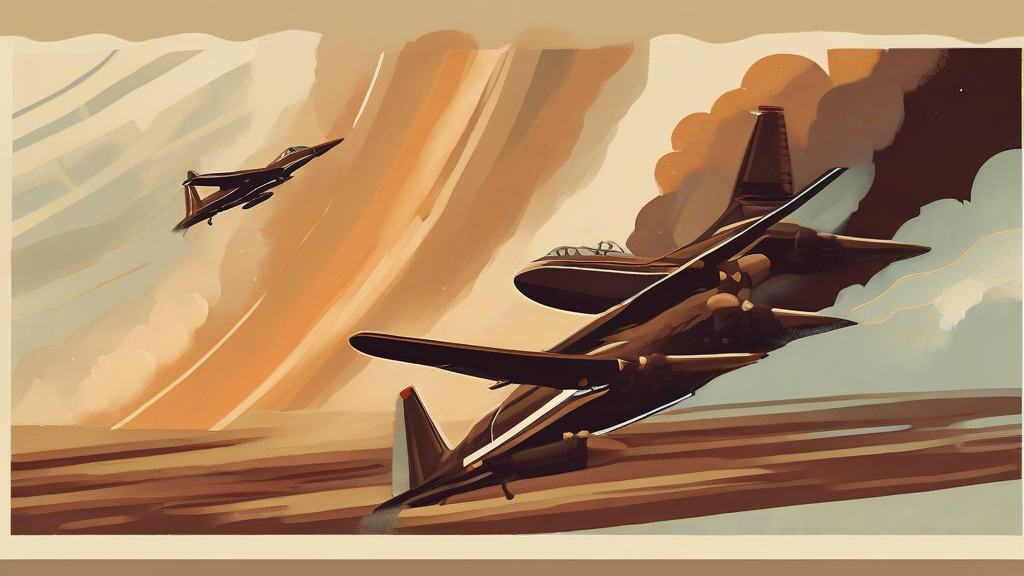
What does divebombing mean?
Divebombing refers to a technique of air attack in which a pilot flies into a steep dive directly over a target, releasing bombs from low altitude so they strike with far greater accuracy than horizontal bombing allows. Developed between the two world wars, it became notorious through aircraft such as the German Junkers Ju 87 Stuka, whose screaming dive made it a psychological weapon as much as a tactical one. Beyond its military sense, divebombing is applied informally to the behaviour of birds and other creatures that swoop sharply down on prey or perceived intruders. The word carries connotations of suddenness, precision, and menace, whether describing warfare or a seagull defending its nest.
nounThe action of attacking a target by diving an aircraft steeply toward it and dropping bombs at close range; also, figuratively, the act of swooping down suddenly upon something, as birds or insects do.
- A military tactic in which an aircraft dives steeply at a target and releases bombs at close range for greater accuracy.
- The action of swooping down abruptly on something, used figuratively or literally of birds and other animals.
"Stuka divebombing became a terrifying symbol of Blitzkrieg in the early years of the Second World War."
"The squadron's precision divebombing destroyed the bridge before enemy reinforcements could arrive."
"From the cliff top we watched gulls divebombing the shoals of fish in the shallows."
During WWII, German Stuka pilots' divebombing siren — the infamous 'Jericho trumpet' — was deliberately designed to spread terror among those below.
Reviewed by Deb Chak, Editor. AI-assisted content curated by RJS Tech Solutions LLP.
Etymology of divebombing
The term derives from the compound verb 'dive-bomb', formed in English in the interwar period from 'dive' (from Old English dīfan, to plunge) and 'bomb', ultimately from Greek bombos, meaning a deep booming sound. It entered widespread use during the Spanish Civil War and Second World War as dive-bombing tactics became a prominent feature of modern air combat.
Related word forms
How divebombing is actually used
Most often encountered as a gerund or verbal noun describing military aviation tactics, especially in historical contexts concerning the Second World War. The figurative use with animals is informal but well established. Often written hyphenated ('dive-bombing'), particularly in British English.
Easily confused with divebombing
Bombing is any aerial or explosive attack with bombs, whereas divebombing specifically means releasing bombs during a steep downward dive to improve accuracy.