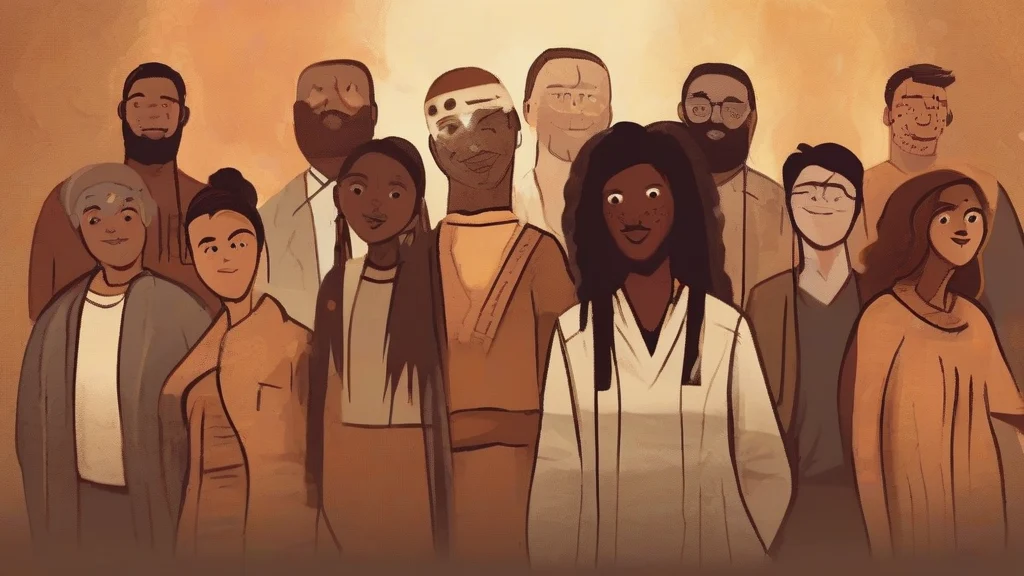
What does diversity mean?
Diversity refers to the condition of being made up of many different elements, people, or forms. In its most prominent modern sense it describes the presence of individuals from varied racial, cultural, ethnic, gender, and social backgrounds within a group, organisation, or society, often carrying positive connotations of inclusion and representation. More broadly, the word applies to any kind of variation: biologists speak of species diversity, linguists of language diversity, and thinkers of a diversity of opinions. Derived from Latin 'divertere', meaning to turn aside or in different directions, the word entered English via Old French in the medieval period. It functions almost exclusively as an uncountable noun, though phrases such as 'a diversity of views' are standard. Because it spans everyday conversation, corporate policy, and scientific writing, diversity is a versatile and frequently encountered word whose meaning shifts subtly with context but always centres on difference and multiplicity.
nounThe state or quality of being varied or different; a range of many different things, especially people of different backgrounds, cultures, or characteristics within a group.
- The condition of having or being composed of differing elements, especially the inclusion of people of different races, cultures, genders, and backgrounds within a group or institution.
- The quality or fact of containing a wide range of different things in general (e.g. biological or linguistic diversity).
"The city's cultural diversity is reflected in its restaurants, festivals, and neighbourhoods."
"Companies that embrace workplace diversity often report greater creativity and better decision-making."
"Tropical rainforests are prized for their extraordinary biodiversity."
Rarely used; 'diversities' appears mainly in academic or technical writing to refer to distinct kinds or instances of diversity.
"The report examined linguistic diversities across the region."
The word 'diversity' comes from the same Latin root as 'divert' — literally meaning to turn different ways.
Reviewed by Deb Chak, Editor. AI-assisted content curated by RJS Tech Solutions LLP.
Etymology of diversity
Diversity comes from the Latin 'diversitas', derived from 'divertere', meaning 'to turn aside or in different ways' — the same root that gives us 'diverse', 'diversion', and 'diverge'. The word entered English through Old French during the Middle English period. Its earliest senses related simply to difference or unlikeness; the modern emphasis on social and cultural inclusion developed much later, becoming widespread in the late 20th century.
Related word forms
How diversity is actually used
'Diversity' is largely neutral-to-positive in modern usage, particularly in social and institutional contexts where it carries connotations of inclusiveness. In scientific contexts (e.g. 'biodiversity') it is strictly descriptive. It is an uncountable noun in most uses, though 'a diversity of...' is an accepted construction.
Easily confused with diversity
Diversity means variety or difference, while adversity means hardship or misfortune — the two are near-rhymes but unrelated in meaning.