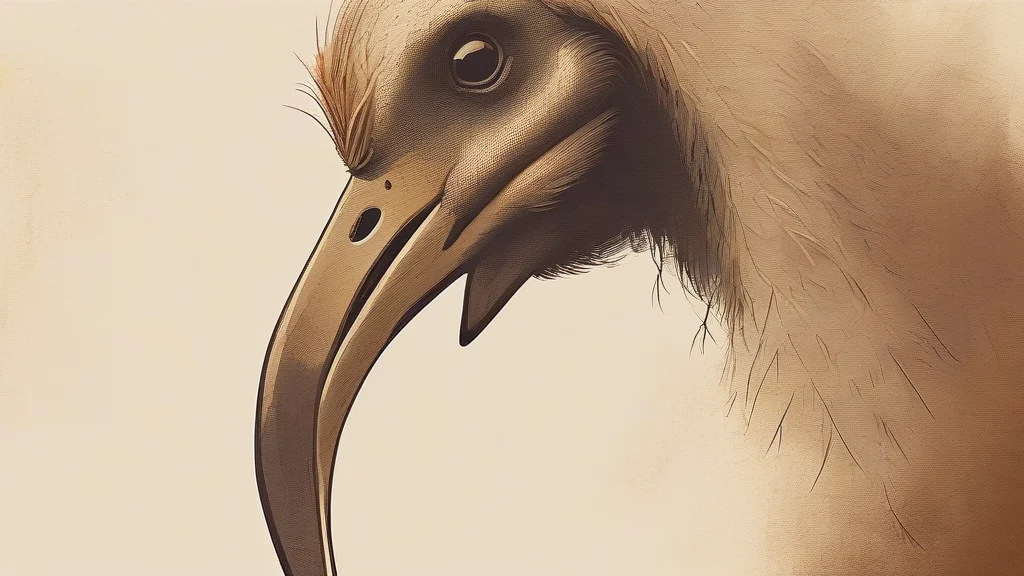
What does dodo mean?
A dodo is a large, extinct, flightless bird that once lived only on Mauritius, an island in the Indian Ocean. Standing roughly a metre tall with grey plumage, a hooked beak, and small useless wings, the species disappeared within decades of Dutch sailors arriving in the seventeenth century, hunted by settlers and by animals they introduced such as pigs and rats. Its rapid extinction gave English a lasting symbol of obsolescence: to go the way of the dodo means to vanish or become obsolete, and calling someone a dodo informally suggests they are out of step with the modern world. The word also survives in the idiom dead as a dodo, meaning completely finished or defunct. Few animals are so firmly woven into everyday language as both a cautionary emblem of human impact on nature and a light-hearted jab at anyone clinging to the past.
An extinct, flightless bird (Raphus cucullatus) endemic to Mauritius, exterminated by sailors and introduced species in the late seventeenth century.
"Museums preserve only fragments of dodo remains, making complete skeletons extraordinarily rare."
Always lowercase in ordinary use; capitalised only in formal taxonomic contexts.
(Informal) An old-fashioned person who fails to keep up with changing times; someone obsolete or out of touch.
"He's a bit of a dodo when it comes to smartphones — he still uses a flip phone from 2005."
Carries a mild, often affectionate connotation rather than harsh insult.
The standard plural is 'dodos'; 'dodoes' appears occasionally but is much less common.
"The last confirmed sighting of wild dodos dates to the 1660s."
The dodo was extinct within about a century of humans first encountering it — making 'going the way of the dodo' one of history's most sobering idioms.
Reviewed by Deb Chak, Editor. AI-assisted content curated by RJS Tech Solutions LLP.
Etymology of dodo
Dodo entered English in the early seventeenth century, borrowed from Portuguese doudo (or Dutch dodoo), which likely derives from doudo meaning 'simpleton' or 'fool' — a reference to the bird's apparently fearless, clumsy demeanour around sailors. Some sources suggest a link to Dutch dodaars, a name for the little grebe, though this connection is debated. The Portuguese root ultimately relates to douro/doido, meaning foolish or crazy, from Latin stultus-influenced or related forms describing silliness.
Related word forms
How dodo is actually used
The figurative sense ('a dodo' = someone outdated) is informal and mildly derogatory, though usually more teasing than insulting. The plural is commonly 'dodos', with 'dodoes' as a rarer variant.
Easily confused with dodo
A dado is a lower section of a wall or a groove cut into wood, while a dodo is the extinct flightless bird or a person out of touch with the times.
A didot is a unit of type size used in continental Europe; it shares letters with dodo but refers to typography, not the extinct bird.